Washington, D.C., January 15, 2026 - President Donald Trump’s recent withdrawal from the foundational United Nations Framework Convention on Climate Change (UNFCCC), the Intergovernmental Panel on Climate Change (IPCC), and 64 other organizations—many of them affiliated with the United Nations—represents a sharp divergence from past Republican presidential administrations that sought to lead international environmental efforts and establish a comprehensive U.S. climate policy, according to declassified U.S. government documents posted today by the National Security Archive.
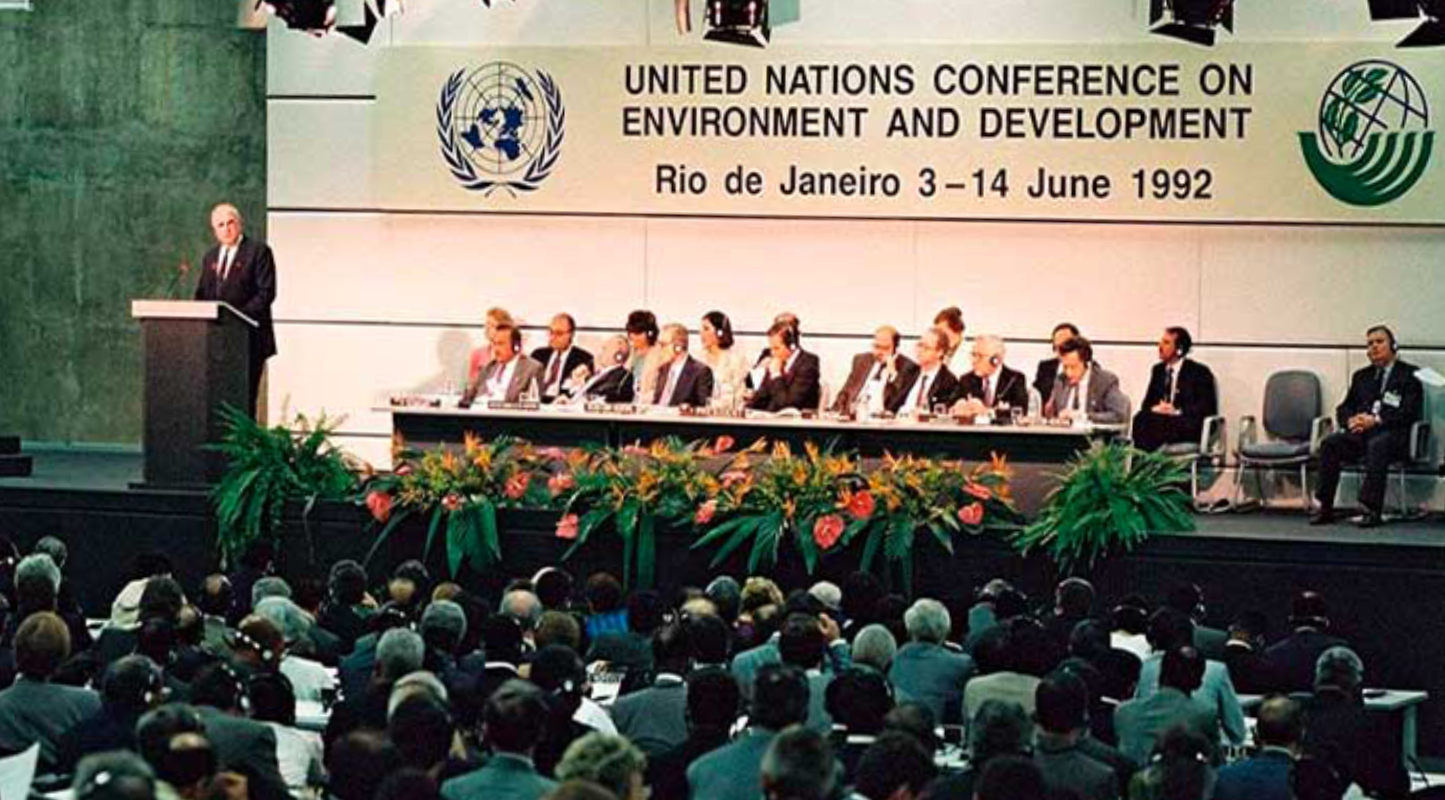
The UNFCCC, adopted on May 9, 1992, during the final year of President George H. W. Bush’s presidential term, is the overarching, bedrock climate treaty that initially brought together 195 countries to discuss the climate crisis. In the decades since its adoption, the treaty has provided a legal framework and bureaucratic infrastructure that has allowed nations to negotiate measures to address rising global temperatures, such as the annual Conference of Parties meetings. President Trump’s decision to sever ties with the UNFCCC is the administration’s latest attempt to roll back global climate efforts, an action critics say will further isolate the U.S. on the world stage.[1]
In the wake of the current administration’s withdrawal from the landmark treaty, the National Security Archive highlights four key documents about the establishment of the UNFCCC from the period when Bush was vice president under Ronald Reagan and during his own presidential term that ended in 1993. These records shed light on how Bush—in part at the urging of his advisors—sought to position himself as a leader on global environmental issues, even if his policies did not always satisfy the demands of environmental advocates.
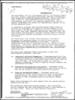
While it is true that Republican presidents have often downplayed climate concerns, declassified records show that senior advisors to President George H. W. Bush (as was the case under Presidents Reagan and Nixon) early on recommended that the U.S. try to sever the “link between economic development and deterioration of the environment,” according to a State Department memorandum that laid out the proposed U.S. position for the July 1989 Paris economic summit. U.S. policy should advocate for “wise, active stewardship over the resources of our planet” and recognize that this was a “responsibility we have to ourselves and as our legacy to future generations.” (Document 1)
President George H. W. Bush’s early action on climate and his administration’s role in ushering in the UNFCCC and IPCC laid the groundwork for President Clinton and Vice President Al Gore to help lead global efforts resulting in the 1997 Kyoto Protocol, which established legally binding limits on greenhouse gas emissions, and shaped U.S. policies under President Obama that led to the 2015 Paris Climate Accords. Indeed, the Reagan and Bush 41 administrations represented the high-water mark of Republican support for multilateral efforts to address climate change, primarily through support for the Montreal Protocol to protect the ozone layer and establishment of the UNFCCC and the IPCC, the scientific advisory body.
The Bush administration’s approach to the proposed climate change negotiations, like Reagan’s, sought to integrate and balance scientific research with assessments of the potential economic impacts of both climate change and steps to reduce greenhouse emissions. In fact, the Bush administration saw the 1987 Montreal agreement, signed under Reagan, as a model for efforts under the aegis of the UN Environmental Program (UNEP) to draft a UN framework convention on climate change that would guide negotiations on a treaty. However, President Bush and his advisors also had doubts about aspects of the scientific consensus on the topic.
William A. Nitze, the Deputy Assistant Secretary of State for Environment, Health and Natural Resources, presented the U.S. position on global climate change at the initial UNEP session in March 1988 and said the U.S. would continue to take a leadership role. (Document 2) But Nitze, who was a key State Department official under both Reagan and Bush, said that more needed to be learned about the global and regional impacts of climate change and the full range of possible responses before the U.S. would consider a global convention on climate change.
To this end, the U.S. strongly supported creation of an intergovernmental panel to conduct and assess scientific research into the extent and effects of global climate change and the development of a range of possible response strategies. This would later evolve into the IPCC. However, U.S. support came with an important caveat: “Whatever response strategies are finally adopted will have to take into account other social and economic goals.”
The Bush 41 administration continued to push for this approach in the UN discussions surrounding what would become the UNFCCC, which was agreed on at the 1992 Rio de Janeiro Earth Summit, and Nitze stayed closely involved. A memorandum he prepared in August 1989 laid out the general principles that should guide a climate agreement. These included securing the widest possible participation (with a focus on the countries that made up a significant majority of the world’s population and those that produced the highest percentage of greenhouse gases); increasing understanding of the scientific aspects of global climate change; and protecting social, environmental and economic well-being from damaging impacts likely to result from climate change. (Document 3)
While the U.S. continued to emphasize the importance of scientific research and analysis, its positions in the UN discussions continued to reflect a desire to balance environmental protection and economic growth. This dynamic is evident in a memorandum setting out the policy guidelines for U.S. participants in a UN Response Strategies Working Group in September 1989 (Document 4). The memo describes what would become repeated components of U.S. policy preferences, emphasizing the use of market mechanisms in combination with regulations to reduce greenhouse emissions and giving countries the widest possible flexibility in meeting any agreed emission cuts. By the end of Bush’s term, there were signs that the administration’s progress on environmental efforts was stalled by perceived “uncertainty” about the science of climate change.[2]
Nonetheless, the U.S. Senate ratified the UNFCCC in 1992 as a formal treaty by a vote of 92 to 0, and it was signed into law by President Bush. With the election of Bill Clinton later that year, U.S. climate change diplomacy moved to a new stage culminating in the 1997 Kyoto Protocol. Ultimately, the administration did not submit the agreement to Congress for ratification, and the next administration, under President George W. Bush, withdrew from Kyoto and promoted a more aggressive energy policy led by Vice President Dick Cheney that deemphasized environmental concerns. The U.S. would continue to promote these views at meetings of the UNFCCC during the majority of George W. Bush’s two terms in office and withheld funds for any Kyoto Protocol-related costs. However, Bush did, in fact, demonstrate signs of reengagement with international climate policy in the last two years of his presidency, as seen with his establishment of the Major Economies Process on Energy Security and Climate Change, though it was widely criticized for weakening multilateral environmental negotiating efforts.[3]
President Obama would go on to reclaim a strong U.S. leadership role in the climate sphere, and his second term would culminate in the landmark Paris Climate Agreement. While President Trump, in his first term, ushered in a radical policy of climate change opposition and denial, his decision to withdraw from the Paris Agreement in 2017 did not stop the subsequent Biden administration from rejoining the agreement and advancing an ambitious climate agenda at home and abroad.
Now, in President Trump’s second presidential term, the United States has become the first nation ever to attempt to withdraw from the landmark UNFCCC treaty. While debate continues over whether these efforts are lawful, President Trump has sent a clear signal that the United States will have no part in multilateral debates about climate change.[4]
The four documents below were originally published in 2018 as part of a comprehensive Archive history of U.S. climate change from President Reagan to President Obama: The U.S. and Climate Change: Washington’s See-Saw on Global Leadership.
The Documents
Document 1
Department of State FOIA (originally document 6 in Briefing Book # 639)
This memorandum lays out proposed U.S. positions on global environmental issues that would establish President Bush as a leader on these topics at the Economic Summit to be held July 13-17, 1989, in Paris. This is seen as very important, as British Prime Minister Margaret Thatcher, French President Francois Mitterrand and Canadian Prime Minister Brian Mulroney had already staked out strong environmental positions, while the U.S. has so far "remained silent." Working in response to a charge from the White House Summit Group, the State Department created a group composed of representatives from State, EPA, Energy, Commerce, and other federal agencies that developed a program that aimed at "breaking the link between economic development and deterioration of the environment." The memorandum recommends that President Bush stress the theme that runs through these proposals of "wise, active stewardship over the resources of our planet. This is a responsibility we have to ourselves and as our legacy to future generations."
The first set of proposals outlines three initiatives to combat environmental pollution, focusing on industrial pollution prevention, prevention and clean-up of oil spills, and the state of the world's oceans. The second set focuses on global warming. The three initiatives discussed here stress studying the most cost-effective ways to slow warming in the future. They are 1) steps to address deforestation and reforestation; 2) increasing fossil fuel efficiency and expanding renewable energy; and 3) support for nuclear energy both for energy security and to contribute to solving the greenhouse problem. The memorandum acknowledged that the last initiative would likely be unpopular with environmentalists. All the proposals are discussed at length in the memorandum, along with the pros and cons for each. The proposals were seen as having only modest budgetary implications for the U.S., though in some cases would call for action by international bodies to whom the U.S. was in arrears regarding its financial support, which could be "embarrassing."
Document 2
Department of State FOIA (originally document 5 in Briefing Book # 639)
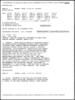
This cable contains the statements made by the U.S. head of delegation, William A. Nitze, the Deputy Assistant Secretary for Environment, Health and Natural Resources in the Bureau of Oceans and International Environmental and Scientific Affairs, to the first special session of the governing council of the United Nations Environment Program (UNEP), held in Nairobi. The meeting was convened to consider three forward planning documents designed to coordinate the UN system of agencies, governments, non-governmental organizations and publics around the world with respect to a System-Wide Medium-Term Environment Program (SWMTEP) for the period 1990-1995; a UNEP Medium-term plan for the period 1990-1995; and extension of the 1984-1989 UN medium-term plan through 1990 and 1991. The range of issues covered by these plans was ambitious: stratospheric ozone depletion, destruction of tropical forests and the biological diversity they support, global climate change, air and water pollution, and international shipments of hazardous wastes.
Nitze confirmed the U.S. intention to play a leading role in framing and implementing the overall goals of these plans, and aligning U.S. environmental priorities with these goals, but this support came with an important proviso: "Whatever response strategies are finally adopted will have to take into account other social and economic goals." This hedging would only grow stronger in the future for the two Bush administrations. Furthermore: The UNEP was "not in a position to enact or enforce environmental laws, regulations or policies. This must be done by the individual countries concerned. UNEP's proper role is to facilitate the development and implementation of such laws, regulations and procedures by individual countries and to assist those countries in establishing the institutional and legal mechanisms necessary for their effective implementation."
Document 3
Department of State FOIA (originally document 6 in Briefing Book # 639)
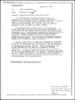
This memorandum was prepared as part of the U.S. participation in the IPCC Response Strategies Working Group (RSWG), which was established to "examine existing legal and institutional mechanisms to determine how they may be used to implement options to limit or adapt to climate change" and "consider new legal and institutional mechanisms that could be used to implement options to limit or adapt to climate change." The bulk of the memorandum is taken up with a list of relevant existing legal and institutional mechanism, while the last part examines possible elements of a framework climate convention. It is this last part (pages 18-21) that is of the most interest as a window into developing U.S. ideas for a climate change treaty, as seen from the State Department.
Looking first at the general principles that should guide a climate agreement, first was the need for the widest possible participation, with emphasis on those nations that make up a significant majority of the world's population and those that produce the greatest percentage of greenhouse gases. The framework convention should follow the model of the 1985 Vienna Convention for the Protection of the Ozone Layer and provide an institutional framework for ongoing assessment of global climate change and possible responses. Its twin goals should "be to provide a framework for: 1) increasing our understanding of the scientific aspects of global climate change and its potential impacts; and 2) protecting social, environmental, and economic well-being from adverse impacts likely to result from climate change." Finally, the agreement should provide for involving and assisting developing nations address climate change.
The Vienna convention was a good model, as it established broad principles of cooperation, not specific and likely contentious provisions dealing with areas such as liability, financial measures or enforcement, and established an institutional structure through which the participants can discuss specific future steps in light of ongoing scientific research. One interesting emphasis is on how the framework goals should not be defined. "Protecting the climate per se is not our objective; rather, our objective is to protect social, environmental, and economic well-being from the adverse effects likely to result from global climate change." Instead, the "framework convention should implement its twin goals by generally adopting the conceptual approach taken by the IPCC. Thus, the convention should focus on cooperation in 1) assessing the relevant scientific information related to global climate change; 2) assessing potential impacts of global climate change and their likelihoods; and 3) formulating and evaluating appropriate response measures, on the basis of such assessments as well as social, economic, and environmental factors and cost effectiveness."
The memorandum underscores the significant importance of ongoing scientific assessment to the success of any framework agreement. This process should be augmented by increased cooperation and coordination, supported by the agreement, in research and climate monitoring "to improve knowledge about the origins, mechanisms, and effects of global climate change." This work should also be the focus of expert panels created by the framework convention "to collect, analyze, and report to the parties on relevant scientific, technical, environmental, social and economic information...," so that his information can be used to develop future response protocols. Financial measures to support these responses would likewise be the subject of future discussion and agreement. Finally, regarding participation of developing countries, the framework should provide for cooperation in technology transfer limit or adapt to climate change.
Document 4
Department of State FOIA (originally document 8 in Briefing Book # 639)
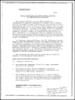
This memorandum lays out the positions the U.S. participants should take in the upcoming October 2-6, 1989, meeting of the UN Response Strategies Working Group, where the agreed report was to be produced. The U.S. had submitted papers, produced by a "lengthy" interagency process, on the five main topics to be covered by the report: legal and institutional measures; technology assistance, development and transfer; financial measures; economic measures; and education and information measures.
Anticipating other governments will be pressing views different from the U.S. this memorandum provided the common policy guidelines the U.S participants should follow in the discussions. Also important would be keeping in mind President Bush's desire "to lead the efforts of the international community to protect and enhance the quality of the global environment while maintaining acceptable economic growth." Therefore, the U.S. positions should be presented positively in terms of ultimately contributing to the "decisive action . . . to understand and protect the earth's ecological balance' called for by the President and other leaders" at the recent Paris Economic Summit.
Notes
[1] Sara Schonhardt, “Trump quits pivotal 1992 climate treaty, in massive hit to global warming effort,” Politico, January 7, 2026, and Jake Bittle, “Trump just took his most dramatic step yet against global climate action,” Grist, January 8, 2026.
[2] Scott Waldman, “This is when the GOP turned away from climate policy,” E&E News, December 5, 2018.
[3] Konstantinos Papanikolauo, “The International Dimensions of the European Green Deal: The EU as a leader of the climate change diplomacy?” Institute of European Democrats, November 2021.
[4] Dharna Noor, “Trump’s move to pull US from key UN climate treaty may be illegal, experts say,” The Guardian, January 12, 2025.