
“Heroic Excavators of Government Secrets”
Illustration by Luis Rendon, Boston Globe
National Security Archive Celebrates 40 Years of Freedom of Information Action
Archive Posts “Top 40” Declassified Documents Obtained Over First Four Decades
Illustration by Luis Rendon, Boston Globe
National Security Archive Celebrates 40 Years of Freedom of Information Action
Archive Posts “Top 40” Declassified Documents Obtained Over First Four Decades
Washington, D.C., December 10, 2025 - Almost 40 years ago, as White House aide Lt. Col. Oliver North was secretly running the Reagan administration’s Iran-Contra operations, he became concerned about the activities of a unique, non-profit research center called the National Security Archive. In the notebook where North recorded all of his meetings and phone conversations, he jotted down a reminder to call former Treasury Secretary William Simon “re: Ford Foundation Grant to Nat’l Security Archives” with the apparent intent to impede funding for the newly created freedom of information organization.
But North failed to block that grant, and the National Security Archive went on to become one of the world’s leading freedom of information advocates and declassified documentation research centers. Eventually, the Archive would use the Freedom of Information Act (FOIA) to obtain the declassification of tens of thousands of secret government documents on U.S. foreign policy—among them North’s own notebooks and Reagan administration White House emails, some of which are included in our special 40th anniversary posting today.
Since its inception, the Archive has led the campaign for transparency in governance in order to advance the public’s “right to know” both at home and abroad. Its staff members were recently characterized as “heroic excavators of government secrets” by author Stephen Kinzer. The “document fetishists” at the National Security Archive, as Washingtonian magazine reported, “have been uncovering protected information the government doesn’t want the rest of us to know—all to help the public see the unredacted truth about our history.”
Over four decades, the organization’s team of “activist archivists” have obtained thousands of revealing secret records—documentation that has not only changed our understanding of hidden histories of the past, but also enhanced, educated and empowered the public discourse over what U.S. policies should be in the future.
Among the extraordinary collections of documentation revealed by the Archive’s efforts are transcripts of Henry Kissinger’s recorded telephone conversations (Telcons); North’s handwritten notebooks on the Iran-Contra operations; Secretary of Defense Donald Rumsfeld’s “snowflake” memos on the wars in Iraq and Afghanistan and other topics; ultra-secret Presidential Daily Briefs (PDBs); CIA memos and cables on covert action in Chile and U.S. support for the Pinochet dictatorship; 7,000 documents from U.S. intelligence files on human rights atrocities in Argentina; and key records relevant to the still unsolved disappearance of 43 Mexican students in Ayotzinapa.
Once obtained, the Archive has actively sought to disseminate these documents through the news media, articles, books, academic venues, and judicial proceedings to enhance the debate over foreign policy issues, for educational purposes, and as evidence in the pursuit of justice for human rights crimes. Among their many impressive efforts and accomplishments, Archive staff have:
From the millions of pages of declassified files liberated through freedom of information action during its first 40 years, the Archive today is posting its all-time “Top 40”—a selection of records that represent the variety of projects the organization has undertaken during that time and which highlight some of the most newsworthy and revealing documents it has successfully pried from secret government archives.
1) The CIA “Family Jewels”: The “Skeleton Files on Illegal Covert Operations
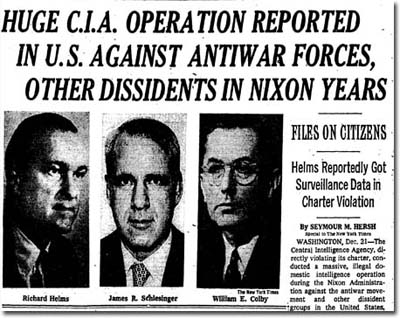
Fifteen years after the National Security Archive’s initial FOIA request, the CIA finally declassified, in June 2007, the full "family jewels" report, detailing 25 years of Agency misconduct. The 702-page collection documented CIA illegal domestic surveillance, embassy and office break-ins, kidnappings and assassination plots, among other “skeletons” in the CIA’s historical closet. The Archive’s publication of the report generated massive national and international media coverage, with major stories in outlets such as the New York Times, Washington Post, NPR’s All Things Considered, and television news channels around the world.
2) “A Study of Assassination” from the CIA’s Guatemala 1954 Files
Following the collapse of the Soviet Union, the CIA briefly toyed with an “openness” effort to garner more public support for its post-Cold War missions; the agency went so far as to hold an open forum at Langley, during which a high-ranking Agency official told the audience that the CIA would begin to review and release documents on major regime change operations of the past, including the 1954 effort to overthrow Jacobo Arbenz in Guatemala, codenamed Operation PBSUCCESS. Archive analysts who attended this briefing promptly filed a FOIA petition for all files relating to PBSUCCESS, eventually leading to the release of dozens of files to the Archive. Among them was this extraordinary “Study of Assassination.” A how-to guidebook in the art of political murder, the 19-page manual offers detailed descriptions of the procedures, instruments, and implementation of assassination. “The simplest local tools are often much the most efficient means of assassination,” counsels the study. “A hammer, axe, wrench, screwdriver, fire poker, kitchen knife, lamp stand, or anything hard, heavy and handy will suffice.” For an assassin using “edge weapons,” the manual notes in cold clinical terms that “puncture wounds of the body cavity may not be reliable unless the heart is reached... Absolute reliability is obtained by severing the spinal cord in the cervical region.”
3) MKULTRA: Drug Tests on Unwitting Americans
An extensive collection of declassified documents gathered by former State Department official and author John Marks on the CIA’s notorious MKULTRA human behavior control program has long been one of the most accessed collections in the Archive’s Reading Room. While most of the original project records were destroyed on the order of CIA director Richard Helms, Marks successfully used the FOIA to recover enough records on MKULTRA to write his seminal work, The Search for the Manchurian Candidate: The CIA and Mind Control: The Secret History of the Behavioral Sciences, later donating his declassified collection to the Archive.
This 1963 memo from CIA Inspector General John Earman records a 1963 meeting in which top Agency officials discussed the only outstanding disagreement over Earman’s earlier audit of the MKULTRA program: whether to continue the MKULTRA practice of conducting sometimes severe drug tests on unwitting U.S. citizens. While Earman, deputy director Marshall Carter, and executive director Lyman Kirkpatrick opposed the practice, others, including Helms and Technical Services Division chief Sidney Gottlieb, argued that “controlled testing cannot be depended upon for accurate results.” The document is a highlight of CIA and the Behavioral Sciences: Mind Control, Drug Experiments and MKULTRA, a Digital National Security Archive collection published in 2024 and built around the records donated by Marks.
4) CIA Director’s History of Torture
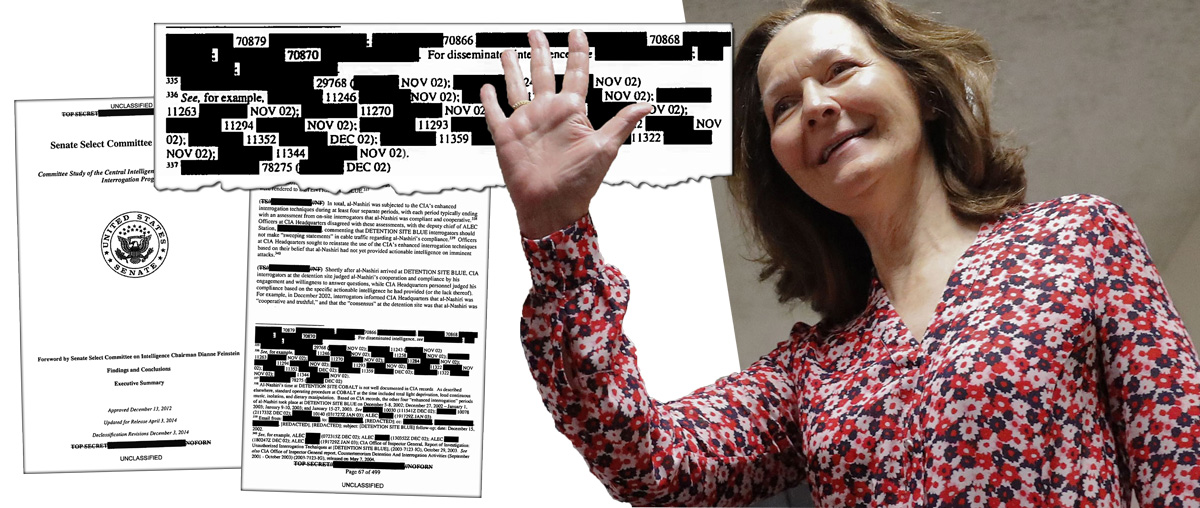
Before becoming CIA director in 2018, Gina Haspel oversaw a CIA black site in Thailand. In a horrific series of cables, Haspel described the horrific “enhanced interrogation techniques” used by CIA contract psychologists James Mitchell and Bruce Jessen on alleged Al-Qa’ida terrorist Abd al Rahim al-Nashiri, the kinds of details the public had previously only seen in the infamous Abu Ghraib photographs from Iraq. Archive director Tom Blanton said the release of Gina Haspel torture cables “shows the power of the Freedom of Information Act to bring accountability even to the highest levels of the CIA.”
5) State Department Counselor’s Memo on Bush Administration Use of Torture
Released in response to an Archive FOIA request in 2012, State Department counselor Philip Zelikow’s memo opposing the “enhanced interrogation techniques” approved by the Bush Justice Department reflected strong internal disagreement over the constitutionality of the interrogation methods. Zelikow said that techniques like “waterboarding, walling, dousing, stress positions, and cramped confinement” violated the constitutional ban on “cruel and unusual punishment.”
6) Kissinger Telcon: The My Lai Massacre
In February 2001, the National Security Archive presented the State Department and the National Archives and Records Administration (NARA) with a formal, legal petition “to compel the Archivist of the United States and the Secretary of State to seek the return of transcripts of Henry Kissinger’s telephone conversations concerning official business.” The transcripts, known as “Telcons,” were made by a pool of government secretaries from daily recordings from Kissinger’s secret phone taping system while he was both national security advisor and secretary of state. When he left office, Kissinger wrongly claimed these were “personal papers” and took them to write his memoirs. After Kissinger was forced to return the documents, the Archive filed a broad FOIA request for their declassification. In May 2004, we received over 17,000 pages of Telcons—perhaps the most candid and revealing collection of foreign policy discussions ever declassified.
Initially, the transcripts of Kissinger’s secretly taped phone conversations were summaries, like this one of Kissinger and Secretary of Defense Mel Laird discussing how to handle the breaking Vietnam war scandal over the My Lai massacre. Kissinger called Laird to set up “a game plan” for managing the crisis. “L said he thought about how to sweep it under the rug. K said we can’t do that.” “L said you can understand a little bit of this, but you shouldn’t kill that many. L said there were so many kids, just lying there.”
7) Rumsfeld “Snowflake” on Afghanistan: “Help!”
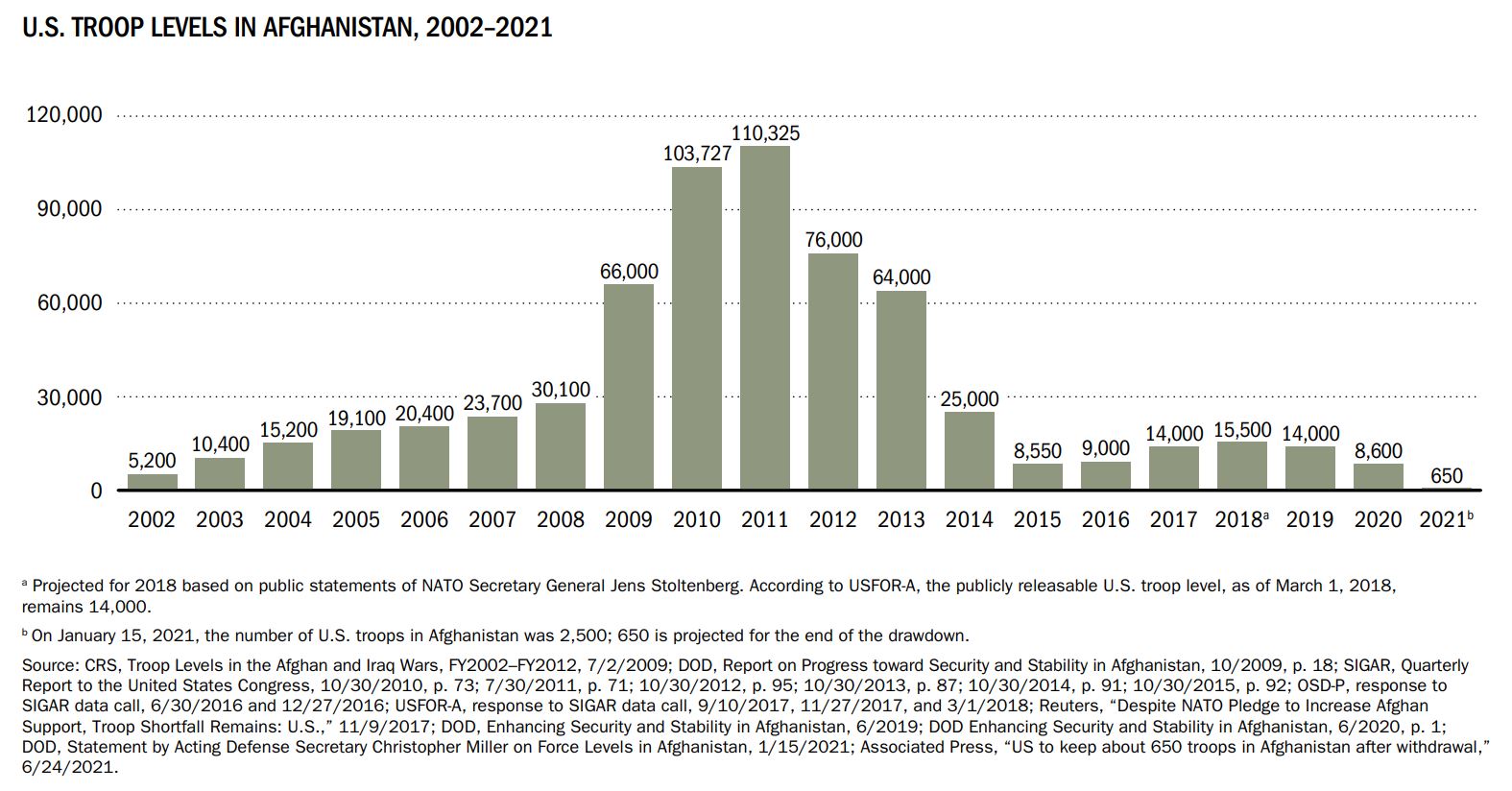
On April 17, 2002, President George W. Bush announced new objectives for Afghanistan in a speech at the Virginia Military Institute, including a stable government, a new army, and a new education system for boys and girls. In effect, Bush’s speech revoked the previous Rumsfeld insistence about not committing “to any post-Taliban military involvement.” That same day when the stated U.S. goals moved to nation building, Rumsfeld’s concerns about having no clear exit strategy from Afghanistan crystallized in a short “snowflake” memo addressed to senior policy aide Douglas Feith and copied to his deputy Paul Wolfowitz and to the chair and vice-chair of the Joint Chiefs. “I know I’m a bit impatient,” he writes, but “We are never going to get the U.S. military out of Afghanistan unless we take care to see that there is something going on that will provide the stability that will be necessary for us to leave.” “Help!”
8) Pentagon War Casualties Honor Guard Photos from Dover Air Force Base
In 2004, the Archive joined a FOIA lawsuit and provided legal support to University of Delaware professor Ralph Begleiter in his efforts to obtain honor guard ceremonial photographs of the return of fallen soldiers from the wars in Iraq and Afghanistan. The lawsuit led to a Pentagon agreement to release hundreds of solemn casket photos from Dover Air Force Base, which were published on the Archive’s website in the summer of 2005, and printed in numerous newspapers, including on the front page of the Washington Post.
9) Calculated Biological Effects of Atomic Explosion in Hiroshima and Nagasaki
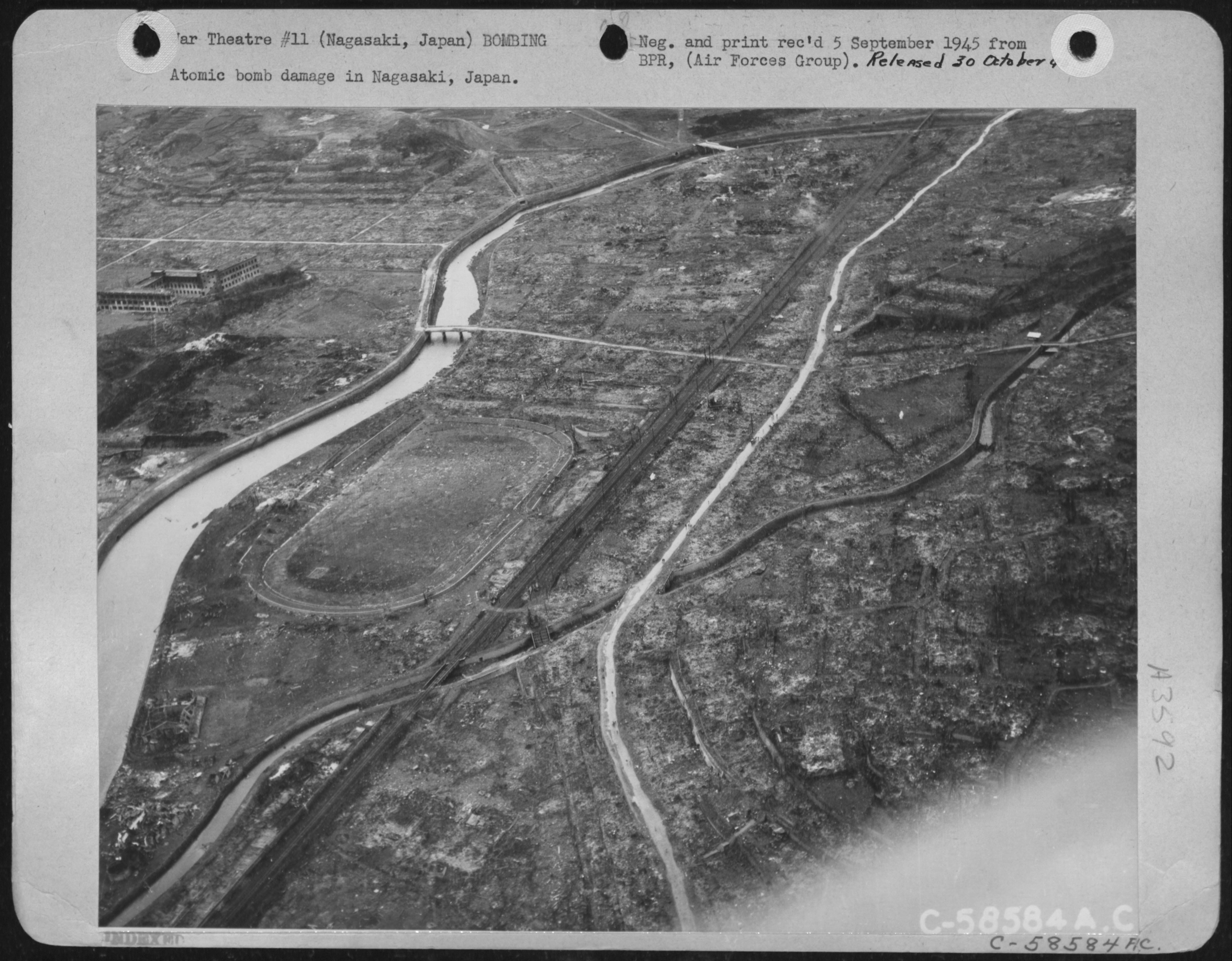
The National Security Archive’s Nuclear Vault has become an indispensable repository on the history of nuclear weapons through the groundbreaking work of Dr. William Burr. This early internal assessment, indirectly confirming Japanese reports that were beginning to appear of fatal radiation disease from the bombings of Hiroshima and Nagasaki—accounts that Manhattan Project director General Leslie Groves characterized as “propaganda”—is an example of what Bill’s relentless FOIA requests and appeals have produced. Long suppressed, the memo provides chilling details on some of the anticipated impacts of the bombings, from blast effects to gamma radiation to severe thermal burns to biological damage. The memo helps to illuminate how “startlingly unprepared” (to quote Bill) Manhattan Project leaders were for the long-term effects of atomic radiation. Slate magazine typified media coverage of the document, noting that Gen. Leslie Groves lied to Congress about the radiation issue and how leading scientists including J. Robert Oppenheimer chose not to dispute him in public.
10) The Nuclear Target List: SAC Atomic Weapons Requirement Study, 1959
Since the Archive’s website first launched in 1998, the Nuclear History Project has accounted for more posted documents, ranging from records on Israel’s Top Secret nuclear program to the estimated environmental damage of a nuclear exchange, than any other contributor. In 2015, Bill generated global headlines when he posted, for the first time, the declassified Strategic Air Command’s 1959 target lists which included major cities throughout the Soviet Union, and populated areas for “systematic destruction.”
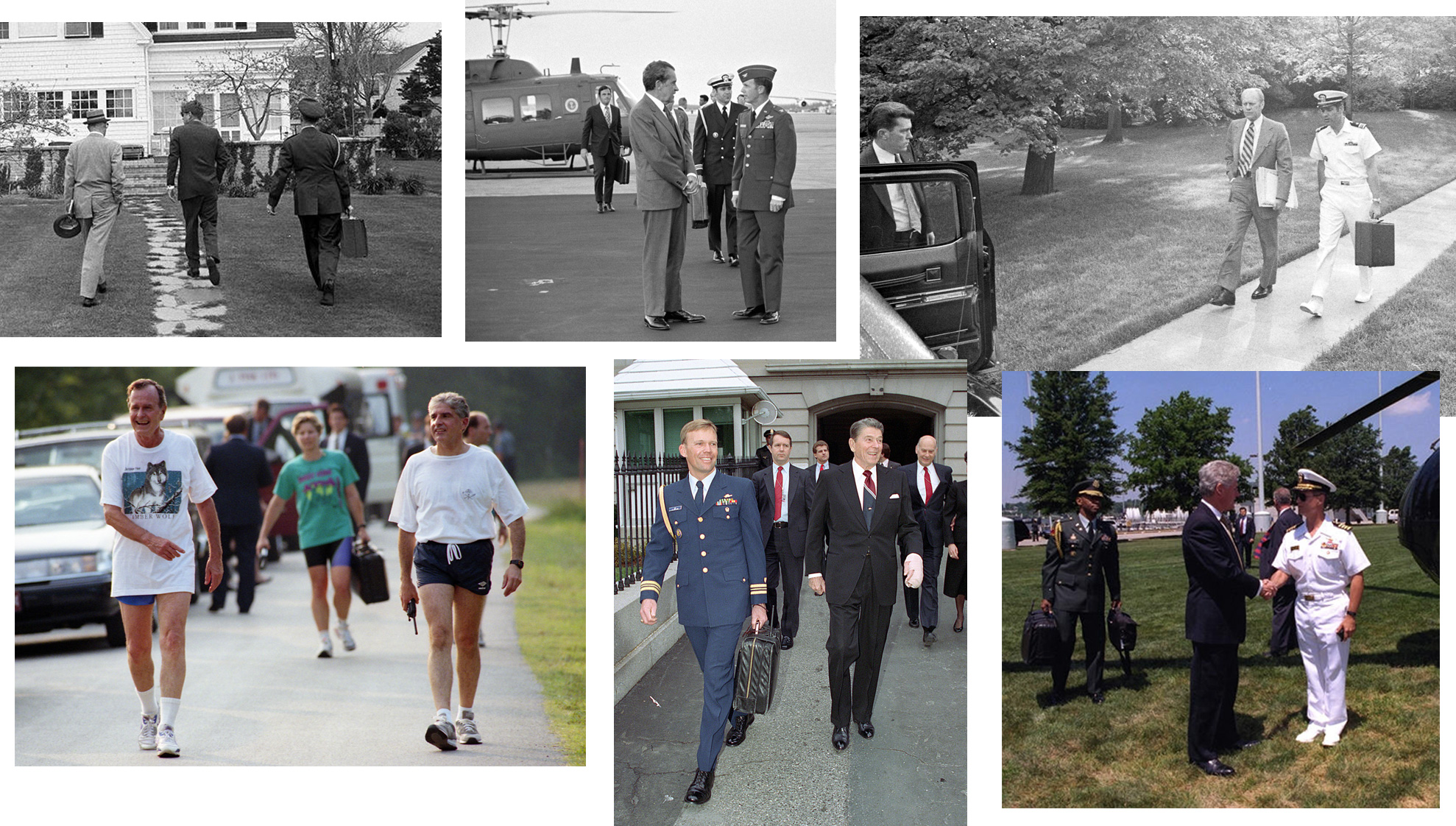
Under Bill Burr, the Archive’s Nuclear Vault has explored an array of topics on the history of nuclear weapons, including U.S. targeting priorities, the SIOP, and global proliferation. Here he turns his attention to a highly familiar symbol of the nuclear reality—the satchel filled with legal documents, launch codes, and other paperwork known as the nuclear “football.” Bill’s typically exhaustive and innovative archival research took an image made iconic by Hollywood—the briefcase carried discreetly by a military aide everywhere the president goes—and turned it into a history and policy seminar. The issues Bill raised in a series of postings and published articles ranged from nuclear decision-making to the delegation of launch authority, to questions of Constitutionality and continuity of government, to the risk of physical vulnerabilities (recall Mike Pence evading Jan 6 rioters with a Coast Guard officer on his heels). Media sources from Arms Control Today to Smithsonian magazine ensured the story would reach an unusually diverse audience.
12) Able Archer 83: The Nuclear Wargame that Almost Led to Atomic Armageddon
In the course of research for his groundbreaking book, Able Archer 83, former Archive FOIA director Nate Jones obtained dozens of extraordinary, formerly highly secret records on how a NATO war game almost generated an accidental nuclear conflagration. None were as sensitive as this once highly classified PFIAB report—it was stamped SECRET, UMBRA, GAMMA, WNINTEL, NOCONTRACT, ORCON—about this “hair-trigger” moment in U.S.-USSR relations. Some of the declassified documents Nate obtained were apparently considered so sensitive that the CIA sought to delete them from the already posted Foreign Relations of the United States series earlier this year. The National Security Archive immediately posted the censored records on its website. From the Daily Mail, to Esquire Magazine, to the Washington Post, the Able Archer documentation has generated numerous international news stories.
13) Energy Department Study on “Global-Scale Physical Effects of Nuclear War”
Another historically important document uncovered by the Nuclear History Project is this 1983 study from scientists at the Department of Energy’s Lawrence Livermore Laboratory, which found that a full-scale nuclear war between the superpowers would “dramatically affect the atmosphere’s temperature, dynamic, precipitation, and chemistry,” reduce “the light reaching the surface in the Northern Hemisphere by 90% or more,” and could cause “a cooling of continental land areas by up to 30°C.” The internal study of the “Global-Scale Physical Effects of a Nuclear Exchange” was featured in a 2023 Electronic Briefing Book on U.S. government thinking about the possibility of a “nuclear winter,” in which the fire effects of multiple nuclear detonations would produce enough smoke and soot to block sunlight and dramatically lower the Earth’s temperature.
14) The Diario Militar: The Guatemalan Death Squad Logbook
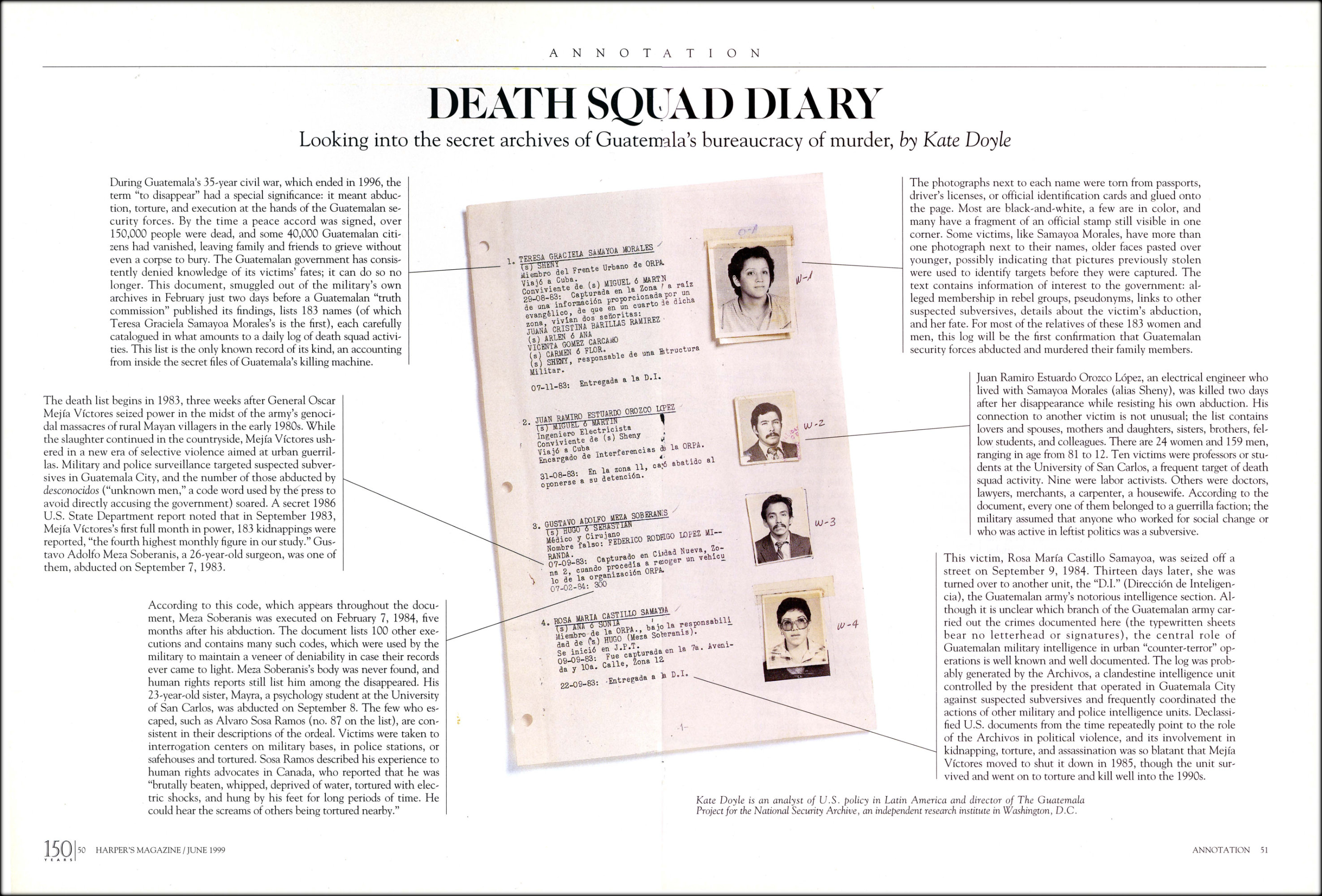
The Archive has devoted considerable resources to obtaining documentation on human rights crimes around the world, and sharing them with judges, lawyers, investigators and the families of victims. Of all the human rights-related records obtained by the Archive, this 74-page Guatemalan military logbook recording the detentions, torture and executions of 183 victims remains the most dramatic and significant. The official ledger of atrocities was smuggled out of the military intelligence files in Guatemala and obtained by the Archive’s Kate Doyle to assure its perseveration and use in legal efforts to hold human rights violators accountable. The Archive, along with three other human rights agencies, held a press conference at the National Press Club to publicly reveal the existence of the logbook. “This chilling document is the death squad equivalent of an annual productivity report, an account from inside the secret files of Guatemala’s killing machine,” said Kate, who directs the Archive’s Guatemala Project. “It is absolutely unique—a rare glimpse of organized political murder from the perspective of the perpetrators who committed it.”
15) CIA on Status of Mexican Student Movement, 1968
On October 2, 1968, young people in Mexico capped a summer of protests demanding democracy and an end to government repression with an enormous rally held outside a building complex called Tlatelolco. The event took place just days before the scheduled start of the Olympic Games in Mexico City, and President Díaz Ordaz decided to take action to end the demonstrations once and for all with a violent crackdown. Security forces opened fire on the students gathered in the plaza, killing and wounding dozens of people. Hundreds more were arrested. This CIA document—written almost a month before the Tlatelolco massacre—is a prescient reflection on the historical magnitude of the uprisings and the evident crumbling of the ruling Institutional Revolutionary Party's control over all aspects of Mexican life. “The old order is passing,” the CIA’s Mexico City Station wrote. “Students have found they can be a significant element in the nation’s decision making process, and they are no longer contented with the patronizing attitude of the government.” In 1998, the Archive published this and other declassified records to mark the 30th anniversary of the tragedy, noting that, while U.S. documents provided new details about the incident, “Mexico’s secret archives are also critical for a full understanding of Tlatelolco—and until they are opened, doubts about the truth of the Tlatelolco massacre will linger on." The National Security Archive was part of a process that four years later resulted in Mexico passing its first freedom of information law.
16) Kissinger Gives Green Light to Dirty War in Argentina
This revealing Kissinger “memcon” obtained through the FOIA by Carlos Osorio, director of the Archive’s Argentina documentation project, captured the U.S. Secretary of State effectively giving a green light to the “dirty war” of repression in Argentina, during which an estimated 30,000 Argentines were disappeared by the country’s secret police services. In a meeting in Washington with Argentina’s military foreign minister, Admiral Cesar Augusto Guzzetti, Kissinger said: “Look, our basic attitude is that we would like you to succeed. I have an old-fashioned view that friends ought to be supported. What is not understood in the United States is that you have a civil war. We read about human rights problems but not the context. The quicker you succeed the better…” Publication of the document generated headlines around the world, including a frontpage story in the Miami Herald titled “Transcripts: The U.S. Ok’d ‘dirty war.’”
17) CIA Report on Condor/Teseo “Regulations”
The Archive’s Carlos Osorio also spearheaded the effort to convince the Obama administration to authorize the declassification of thousands of U.S. intelligence records on the era of repression in Argentina; some 7,000 detailed documents were released under the first Trump Administration in April 2019. Among them was this CIA translation of a secret accord among the Southern Cone secret police agencies to manage Plan Teseo, a sub-directorate of Operation Condor dedicated to death squad operations against dissidents in Europe and elsewhere. The document captures the banality of evil—bureaucratic regulations, budgets, working hours, and procedures for identifying and eliminating opponents of the Southern Cone military regimes. Of the 7,000 documents, the New York Times coverage of the Argentina declassification lead with this specific CIA record on “Teseo.”
18) Colombian President’s Ties to Narcotraffickers
Released in response to an Archive FOIA request in 2004, this Defense Intelligence Agency (DIA) report from 1991 was the first declassified U.S. document linking Colombian President Alvaro Uribe to narcotraffickers. The document was covered widely in the news, with major stories in the New York Times, Newsweek, the Los Angeles Times, and across the Colombian media landscape. To this day, Uribe is still known to many in Colombia as “narcotrafficker number 82,” referring to his numbered position on the DIA list, where his name appears alongside Medellin cartel chief Pablo Escobar, arms trafficker Adnan Khashoggi, and Panamanian strongman Manuel Noriega. In 2018, Archive Colombia project director Michael Evans built a database containing thousands of declassified records for the Colombian truth commission and provided technical support throughout the construction of their final report, which detailed the role of narcotics-related corruption, sharply criticized the abuses of Colombia’s security forces, and condemned decades of punitive counternarcotics programs pushed and backed by the U.S.
19) The Chiquita Trial: Thomas Memo on Colombia Paramilitary Payments
Attorneys representing the victims of paramilitary violence in Colombia read the full text of this handwritten memo by Chiquita attorney Robert Thomas into the record at the 2024 wrongful death trial against the banana company—the first time that a major U.S. corporation liable by an American jury for complicity in serious human rights abuses in another country. First obtained by the Archive in a landmark FOIA lawsuit against the U.S. Securities and Exchange Commission, the memo describes how Chiquita staff in Colombia hid payments to paramilitary groups through a series of front companies and ostensibly legal “Convivir” self-defense organizations run by the Colombian Army. Thousands of additional Chiquita records were summarized in an itemized schedule of Chiquita’s paramilitary payments by Archive Colombia project director Michael Evans who took the stand and presented his findings to the the jury during the trial.
20) The Rosenberg Case: The Grand Jury Testimony of David Greenglass
On May 19, 2015, the Archive won a court petition for the release of one of the final pieces of the historical record on the celebrated Rosenberg spy trial—the grand jury testimony of David Greenglass, who in 1951 (likely falsely) incriminated his sister Ethel, helping to send her to the electric chair. The Archive, along with petitioners from various historical organizations, toiled for years on the Rosenberg case, winning the release of a trove of other grand jury material in 2008. The law firm Vladeck, Waldman, Elias & Engelhard represented the petitioners. The Greenglass revelations produced headlines in the New York Times and many other major media outlets, focusing public attention on longstanding questions of guilt and innocence, due process, and political accountability for one of the pivotal espionage cases in American history.
21) The U-2 and Oxcart Programs: Area 51 Declassified
As an Archive Senior Fellow, the late historian and analyst Jeffrey T. Richelson directed the U.S. intelligence community project, obtaining thousands of revealing documents through rigorously researched FOIA requests. In response to one of those requests, in 2013 the CIA released a substantially less-redacted version of a Top Secret history of two key aerial reconnaissance programs titled The Central Intelligence Agency and Overhead Reconnaissance: The U-2 and OXCART Programs, 1954-1974. The study revealed the CIA’s use of the mysterious Area 51 in Nevada as a base and testing ground, generating extensive media attention. This document was featured in news segments on CBS, CNBC, the Today Show and in countless articles in publications such as The Daily Beast, Foreign Policy, and USA Today.
22) Operation Glowing Symphony: U.S. Cyber Command Targets ISIS
In recent years, cyberspace has become a major domain of U.S. military operations. Not surprisingly, information about capabilities, strategies, and challenges is often closely held. For over a decade, the National Security Archive’s Cyber Vault project has been filing FOIAs aimed at breaking loose secret documents that describe the scope, purposes, and costs of cyber ops. Our most significant success to date relates to Operation Glowing Symphony, a Top Secret activity targeting ISIS’s use of social media and internet propaganda. Systematic FOIA requests by Cyber Fellow Michael Martelle yielded a number of records that, despite heavy redactions, not only marked the government’s first official acknowledgement of offensive cyber operations but divulged in surprising detail the nature of the mission, the complexity of its methods, and the many strategic and tactical hurdles such operations confront. Wide-ranging news coverage in the Washington Post, Wall Street Journal, NPR, Politico, AFP, and other outlets focused on two postings from 2018 and 2020, specifically highlighting revelations contained in materials such as this 120-day USCYBERCOM assessment of Glowing Symphony.
23) NSA History Discloses Domestic Spying During Cold War
In 2013, an Archive access request pried loose this stunning National Security Agency (NSA) history, American Cryptology during the Cold War, which included previously unseen evidence of NSA domestic spying operations that targeted civil rights leader Martin Luther King, Jr., boxing champion Muhammad Ali, Senator Frank Church (D-ID), and other prominent U.S. citizens, including journalists. The volume was released thanks to an appeal filed by the Archive with the Interagency Security Classification Appeals Panel (ISCAP), which has ordered the release of many important historical documents over the objections of intelligence agencies like NSA and CIA.
24) CIA History on The Battle for Iran
This internal CIA history, one of three lengthy studies the Agency has prepared about the 1953 coup against Mohammad Mosaddeq of Iran, was largely withheld from the public for more than three decades. After numerous requests and appeals under the FOIA over several years, in 2011 Iran project director Malcolm Byrne finally obtained this version which revealed previously redacted passages that confirmed, formally for the first time, the CIA’s role in this early and seminal covert operation. Worldwide media coverage reflected longstanding public interest in the episode, with stories on NPR, The New Yorker, the BBC and in outlets across Europe, Russia, and of course Iran.
25) The Bay of Pigs: The CIA’s Top Secret Internal Inspector General’s Report, 1961
After two years of FOIA efforts by the Archive’s Cuba Documentation Project, in February 1998, the CIA finally declassified its own internal investigation into the April 1961 paramilitary invasion at the Bay of Pigs, kept secret for 37 years. Officially known as “The Inspector General's Survey of the Cuban Operation,” the Top Secret 150-page report castigated the Agency for misleading Kennedy White House officials, bad planning, inadequate intelligence, and conducting an overt military operation beyond “Agency responsibility as well as Agency capability.” The Archive’s release of the report generated television and newspaper coverage around the world, including a full, two-page spread in the New York Times.
26) Kissinger Telcons: Kissinger and Nixon on U.S.-Backed Military Coup in Chile
Found among the records of his conversations with CIA directors, foreign ministers, ambassadors, newspaper editors, high-profile journalists and presidents, was this Telcon of Kissinger discussing the successful military coup in Chile with Richard Nixon. The document revealed that Kissinger had informed the president that “we helped them. [deleted word] created the conditions as best as possible” for the coup. During the conversation, they also commiserated over what Kissinger described as the media’s failure to celebrate them as “heroes” for overthrowing the Socialist government of Salvador Allende. The Chile Telcons attracted major media attention and were the subject an NPR All Things Considered interview with Archive Chile analyst Peter Kornbluh.
27) Iran Contra: Oliver North Email Notes on Noriega-Sandinista Assassination Offer
As the Iran Contra operations unraveled in November 1986, White House aides John Poindexter and Oliver North scrambled to delete thousands of internal “PROFS” notes—an early iteration of White House electronic mail before email became widely available. Congressional investigators eventually discovered the messages backed up in a subterranean White House mainframe computer. The National Security Archive successfully filed a lawsuit to preserve White House email as federally protected records. Eventually the Archive obtained a collection of the declassified Reagan Administration emails, which became the subject of Archive director Tom Blanton’s popular book, White House E-Mail: The Top-Secret Messages the Reagan/Bush White House Tried to Destroy. Published by The New Press in 1995, the book came with a CD-Rom disk loaded with email exchanges such as this one on Panamanian strongman Manuel Noriega’s secret offer to the Reagan White House to “take care of the Sandinista” leadership if the U.S. let him off the hook for drug smuggling.
28) Iran Contra: The Criminal Liability of Presidents Reagan and Bush
In the late 1980s, the National Security Archive became known as a leading research repository of Iran-Contra scandal documentation. When the official investigations ended in 1993, the Archive filed a FOIA request to review and declassify the entire collection of investigative records compiled by Iran-Contra Independent Counsel Lawrence Walsh; his files had been turned over to the National Archives and Records Administration (NARA). Over a decade later, the Archive’s petition had become the oldest unresolved FOIA request submitted to NARA. Eventually, hundreds of records were declassified, among them these two detailed legal evaluations on the roles of both Ronald Reagan and George H.W. Bush in the Iran and Contra operations. In November 2011, the 25th anniversary of the Iran-Contra scandal, the Archive publicly posted these legal overviews on our website, providing a verdict of history on the conduct of two former U.S. presidents in the scandal.
29) Iran-Contra: Oliver North Notebook on Blocking Ford Foundation grant to Archive
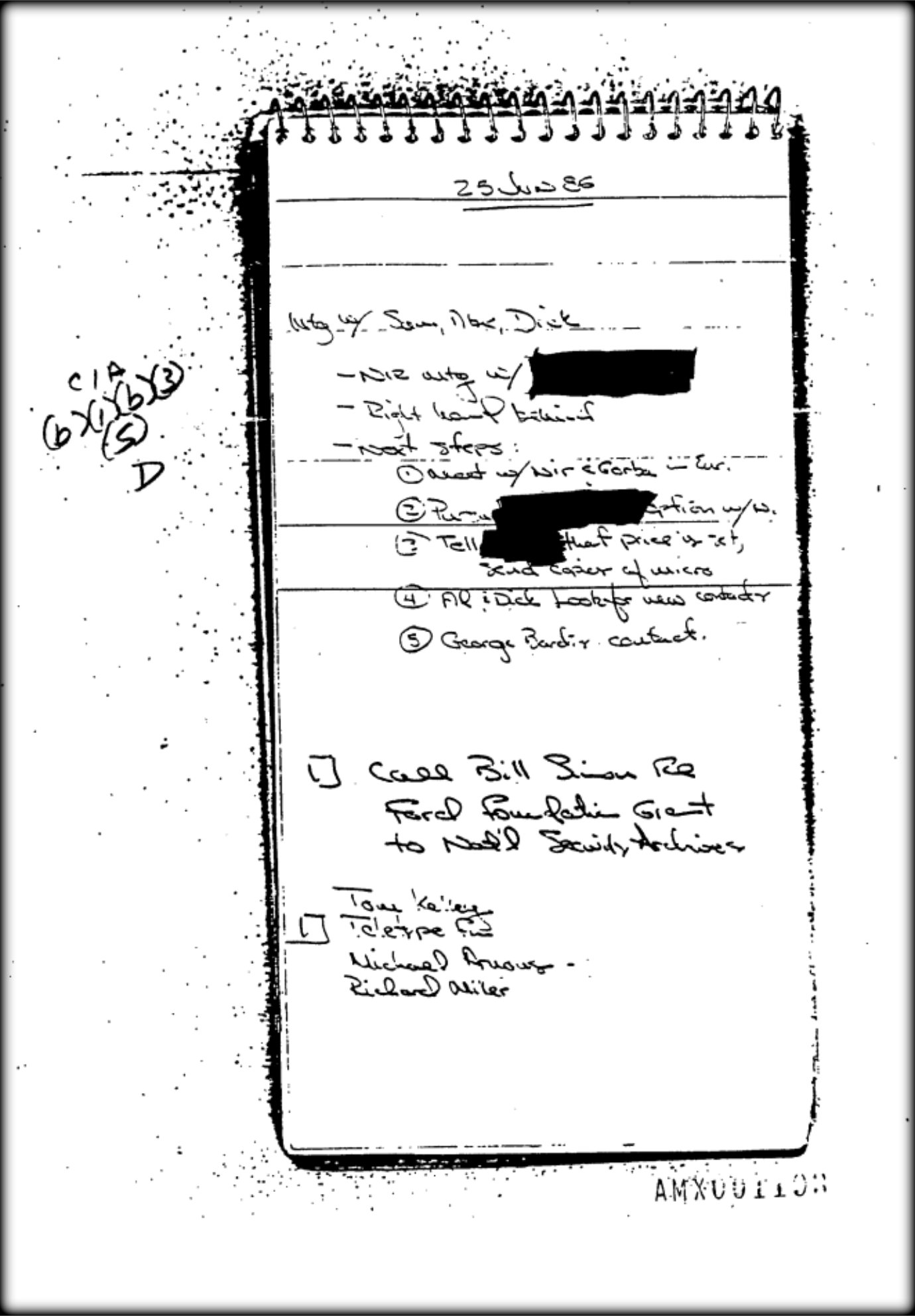
The chief foot soldier of the Iran-Contra conspiracy, Oliver North, was not just an indefatigable covert operator, he was also a fervent note-taker, filling many reporter’s notebooks with names, dates, and other details of his daily doings, which later proved invaluable to investigators. As soon as the scandal broke, the National Security Archive filed a FOIA request for his notes. That morphed into a 1989 lawsuit with Public Citizen Litigation Group which produced thousands of pages of extraordinary material on hostage negotiations with Iran, Contra drug running, dealings with the likes of Manuel Noriega, and other secrecy-shrouded activities. As it happens, Archive staff had already become aware of North before the affair went public and had been tracking his illicit U.S.-based Contra support activities. North discovered this and jotted a note to himself to check with the Archive’s lone funder at the time, the Ford Foundation, evidently with an eye to cutting off support. North never followed through, but it was a chilling indicator—borne out by later revelations from the scandal—of the lengths he was willing to consider to protect sensitive covert operations.
30) James Baker’s Assurance to Gorbachev on NATO Expansion
The Soviet Union’s collapse on Christmas Day 1991 had global ramifications that continue to play out in the present day, most recently in the context of Vladimir Putin’s invasion and occupation of Ukraine. On some of the core questions underlying that act and the broader U.S.-Russian relationship, the Archive’s Russia Program, directed by Svetlana Savranskaya, has made critically important contributions by regularly unearthing and disseminating illuminating historical records—not just for the benefit of the West but for Russians themselves who lack full access to their own history.
On the intensely heated topic of whether Soviet and later Russian leaders had reason to expect that the West would not take advantage of Russia’s diminished status by enlarging NATO membership (including adding Ukraine), the project’s findings have added materially to the empirical record and helped to ground the public debate in hard evidence. A notable example is this American transcript of a February 1990 conversation between Mikhail Gorbachev and James Baker, which contains perhaps the most famous U.S. assurance to Moscow on NATO expansion. Baker tells Gorbachev: “The President and I have made clear that we seek no unilateral advantage in this process” of inevitable German unification. “We understand the need for assurances to the countries in the East. If we maintain a presence in a Germany that is a part of NATO, there would be no extension of NATO’s jurisdiction for forces of NATO one inch to the east.”
31) “Whose Russia Is It Anyway?”: From the State Department “Dissent” Channel
In 2017, the Archive filed a FOIA request to the State Department for all “dissent” channel cables—a special category of communications enabling diplomats to critique and oppose U.S. policy approaches they considered ill-advised. Twenty years earlier, the Department had denied a similar request under the infamous deliberative process (b)(5) exemption. But after the 2016 FOIA Improvement Act amendments made it illegal for agencies to use this exemption after 25 years, the Archive decided to test the principle. The resulting lawsuit produced a breakthrough ruling and the release of a wide array of previously inaccessible historical records. But this extraordinary dissent cable from Moscow was obtained through Archive historian Svetlana Savranskaya’s FOIA lawsuit to obtain the diplomatic papers of former top State Department official Strobe Talbott. Written in 1994 by political attaché E. Wayne Merry, this cable opposed the “shock therapy” approach to Moscow’s transition from Communism. The Archive published the document and a contextual essay by Merry, which became the subject of a special New York Times analysis, “A Secret Cable and a Clue to Where U.S.-Russia Relations Went Wrong,” by former Times Moscow bureau chief Serge Schmemann in January 2025.
32) Cuban Missile Crisis: The Mikoyan-Castro Talks
A core part of the Archive’s work on the Cuban missile crisis has been exploring Soviet and Cuban perspectives. This includes developing relationships with veterans of the crisis from those countries as well as leading scholars and archivists. An important example is Sergo Mikoyan, son and personal secretary to Anastas Mikoyan, a longtime member of the Soviet leadership who gained the personal trust of Fidel Castro in the early 1960s. Sergo has donated a series of revelatory documents to the Archive that chart the evolution of the crisis and illuminate Moscow’s important broader relationship with Havana. In this “memcon” with Cuban leaders on November 22, 1962, the elder Mikoyan delivers the tough message that the Kremlin will soon be withdrawing all tactical nuclear weapons from the island, a blow to Cuban security, morale, and prestige in Castro’s eyes. It was a moment of desperation and even poignancy—aspects of the fraternal relationship that were not available in such vivid detail to the outside world before these records materialized. Sergo subsequently published a book based largely on the documents, edited by the Archive’s Svetlana Savranskaya, which Foreign Affairs called a “marvelous volume.”
33) The Cuban Missile Crisis: The Secret Kennedy-Khrushchev Letters to End the Conflict
In the late 1980s, Archive senior analyst Peter Kornbluh obtained a State Department storage list of documents related to the Cuban missile crisis, among them hundreds of still secret records on Operation Mongoose and files on secret correspondence between President Kennedy and Soviet Premier Khrushchev that continued several weeks after the missile crisis had ostensibly ended. The list provided a roadmap for over 40 FOIA requests specifying file folder titles in dozens of banker’s boxes. But obtaining the declassification of the Soviet side of the post-missile crisis correspondence eventually required a formal petition to the Russian government in 1991 to provide diplomatic permission for the State Department to release Khrushchev’s letters to Kennedy. The previously unknown correspondence generated a media sensation in early 1992 when it was released, in time for a major international 30th anniversary conference in Havana attended by Fidel Castro. Castro told the conferees that reading the Kennedy-Khrushchev correspondence had convinced him of the need to personally participate in the unique meeting which united surviving members of the Kennedy White House, Soviet military officers who had participated in the missile operation, along with Castro and his top aides.
34) Viktor Anoshkin’s Diary on the 1981 Solidarity Crisis in Poland
In November 1997, the Archive co-organized a major international conference on the 1980-1981 Solidarity crisis that featured a trove of extraordinary documents obtained from Polish, Russian, and American archives. The most eye-popping was this page from the diary of Lt. Gen. Viktor Anoshkin, aide-de-camp to the Soviet commander of the Warsaw Pact, which offered damning evidence that Poland’s Communist leader at the time, Gen. Wojciech Jaruzelski, despite his self-portrayal as a Polish patriot, had courted a Soviet invasion to save the party—and himself—but that Moscow had decided it would not invade. (“This is terrible news for us!!” Jaruzelski lamented in the notes.) The Archive’s Malcolm Byrne invited Anoshkin to the conference on the specific condition that he share his diary with the world. The New York Times, Los Angeles Times and others noted the importance of these records in fundamentally challenging long-held assumptions about the Cold War. Zbigniew Brzezinski told the New York Times: “Before this session, I thought the Russians were still likely to come in. It’s now coming out from documents that they were not.”
35) Chernyaev Diary Entry on Fall of the Berlin Wall, 1989
Anatoly Chernyaev was Mikhail Gorbachev’s top foreign policy aide from March 1986 through the collapse of the USSR in December 1991, and the two retained a close connection subsequently. A remarkable figure who defied Western hardline stereotypes at the time, he promoted the peaceful end of the Cold War and in retirement advocated for historical transparency and the search for scholarly truth. He participated in numerous Archive conferences and became a vital supporter of the Archive’s Russia program. In 2004, he donated to the program his professional and personal diary, which he maintained from 1971 through 1991. In this brief but seminal entry from the day after the fall of the Berlin Wall, Chernyaev, with characteristic honesty, reflects on the event’s significance. He describes it with a sense of wonder, giving full credit to his boss for bringing about “the end of Yalta ... [and] the Stalinist legacy ... This is what Gorbachev has done.” Over the course of a dozen years, the Archive, under the direction of Russia Programs director Svetlana Savtanskaya, translated the “public” portions of the diary in their entirety, and in so doing added an extraordinary contribution—“irreplaceable,” in the words of Pulitzer winner David Hoffman—to the literature from the Soviet side of the end of the Cold War.
36) Daniel Patrick Moynihan Memo on Climate Change, 1969
The Climate Change Transparency Project, directed by Rachel Santarsiero, has regularly been posting key documents on environmental issues and monitoring current administration efforts to censor government websites of climate-change related data. This posting featured early discussions during the Nixon era to address what future Senator Daniel Patrick Moynihan, then an urban affairs adviser at the White House, called the “carbon monoxide problem.” His famous memos to White House aide John Erlichman, obtained from the Nixon Presidential Library, were featured in this posting.
37) The First White House Climate Assessment
An important addition to the Climate Change Transparency project’s growing collection of records, this 1971 document reflects an early effort by the Office of Science and Technology to apply new technologies to national problems, including energy, the environment, health care, natural disasters, and transportation. The section titled “Determine the Climate Change Caused by Man and Nature” addresses how to “assess the future impact of natural climatic changes, provide alerts to potential catastrophic trends and gain new environmental insight and understanding as a basis for wise strategies.” Notably, the report linked climate change “to all other initiatives to a varying degree,” such as the transportation industry, natural disasters, and human health. The document was included in a special 2024 posting on efforts to address the climate change issue during the Nixon era: “The ‘Carbon Dioxide Problem’: Nixon’s Inner Circle Debates the Climate Crisis.”
On December 21, 1970, Elvis Presley visited the White House and met Richard Nixon; the photograph of the two together became the most requested item from the National Archives. The National Security Archive acquired and publicized the background documents to the visit, including Elvis’ handwritten letter to Nixon requesting a meeting and to be named a “Federal Agent at Large,” and internal White House memos to H.R. Haldeman recommending that Nixon meet privately with Elvis, as a way of showing that the president was interested in “meeting bright young people outside the government.” To which Haldeman scribbled in the margin: “You must be kidding.”

39) The CIA’s “Acoustic Kitty” Program
This heavily redacted report revealed a CIA program to insert surveillance devices in cats and train them to approach foreign espionage targets such as embassies abroad. The program ran into problems when the highly trained felines got struck by cars or simply ran away; the report notes that the program “would not be practical.” Obtained under the FOIA by the Archive’s intelligence historian, Dr. Jeffrey Richelson, this document became one of the most popular records in the Archive’s CIA collection.
40) Kissinger and FOIA: “The illegal we do immediately; the unconstitutional takes a little longer”
Henry Kissinger was perhaps most famous for his dedication to the cold practice of realpolitik. But he was also known for a sense of humor that he deployed regularly with world leaders to relieve moments of tension. At this meeting in March 1975, he deflects an insistent Melih Esenbel, Turkish minister of foreign affairs, who has just proposed that the U.S. violate its own arms embargo against Turkey following its 1974 invasion of Cyprus. When the American ambassador bluntly tells Esenbel his idea is “illegal,” the secretary of state steps in: “Before the Freedom of Information Act, I used to say at meetings, ‘The illegal we do immediately; the unconstitutional takes a little longer.’ [laughter] But since the Freedom of Information Act, I’m afraid to say things like that.” It was an impromptu nod to the (potential) power of FOIA, which had just been amended and substantially reinforced a few months earlier.