Washington D.C., March 17, 2021 – During the 1950s and early 1960s, a remarkable number of crises arose during which U.S. leaders made threats, authorized nuclear weapons for use, and put strategic forces in a higher state of readiness, manifesting an almost reflexive reliance on displays of military force, according to a National Security Archive study posted today of declassified records, many published for the first time, on the use of alerts and the Defense Condition (DEFCON) system.
From Berlin in 1948 to Suez and Taiwan in the 1950s to Cuba in 1962, and Lebanon and Korea in the 1970s, the United States almost routinely put its armed forces, including the Strategic Air Command (SAC), on alert, ostensibly to deter adversaries or to support diplomatic objectives. At times, the U.S. posture struck a nerve among its allies. For example, State Department memos from 1959 report that Canadian officials were growing anxious that nuclear-armed SAC overflights might trigger an East-West war.
Today’s posting, the first of two parts on the subject, features numerous documents that are being published for the first time – mainly declassified official internal histories – and that cover a variety of important strategic and procedural developments, including the creation of the DEFCON system in 1959. It also documents the first use of the DEFCON system after the Paris Summit collapsed in May 1960 over the U-2 crisis.
* * * * *
Alerts, Crises, and DEFCONs
By William Burr
When the U.S. Marines landed on the beaches near Beirut in July 1958, during the Lebanon crisis, the Eisenhower administration wanted to ensure that the Soviet Union stayed out of the Middle East. To deter Moscow from any thought of intervention, at the president’s request, the Strategic Air Command put its forces in the U.S. and overseas on alert. According to documents published today by the National Security Archive, by 18 July 1132 SAC bombers, mainly B-47s, were in combat configuration. Of those, 405 were on a high alert “full show of force” posture, with nuclear weapons loaded. SAC maintained that posture for five days. The alert included bombers deployed on rotation in Spain, Morocco, and the United Kingdom under the “Reflex” program. SAC forces stayed on alert through the end of the month. It was the largest SAC alert before the DEFCON 2 of the Cuban Missile Crisis.
Today’s posting suggests how a near-reflexive reliance on shows of force during foreign policy crises became a matter of course for Washington during the early years of the Cold War. This became a continuing pattern. When diplomatic and military crises broke out and Washington saw threats to its interests in Europe, Asia, the Middle East, or elsewhere, or was at loggerheads with Beijing or Moscow, U.S. presidents and their advisers often put armed forces, the U.S. Navy or SAC or both, on alert, often on a war footing, to deter adversaries with devastating threats. The crises stretched around the world, from Berlin in 1948 to Lebanon and Taiwan in 1958 and to Korea in 1968 and 1976 In those crises and others, Washington alerted strategic forces as a show of force to support diplomatic objectives and in the event a crisis turned into military confrontation.
In today’s posting, the first of two parts on the subject, the National Security Archive publishes documents – mainly declassified official histories, many of the records for the first time – on alerts that took place from 1948 to 1958, from the Berlin Crisis of 1948 to the Taiwan Strait Crisis of 1958. In addition, the posting documents the creation of the Defense Condition [DEFCON] system – recorded in a 1959 Joint Chiefs of Staff memorandum – that created it and materials relating to the first DEFCON in May 1960 at the time of the breakdown of the Paris Summit.
At the time of the first crisis documented in today’s publication, during 1948-1949 over Berlin, the Strategic Air Command had a nuclear mission, but it did not have access to nuclear weapons. The Atomic Energy Commission had direct control of the weapons and any change in custody would require a presidential decision. Harry Truman, who saw nuclear weapons as terror weapons, rejected military custody even after the Berlin Crisis had begun.[1] During the Crisis, SAC bombers sent to Western Europe on an emergency basis were only equipped with conventional explosives. The few “Silver Plated” nuclear-capable B-29s remained in the United States.
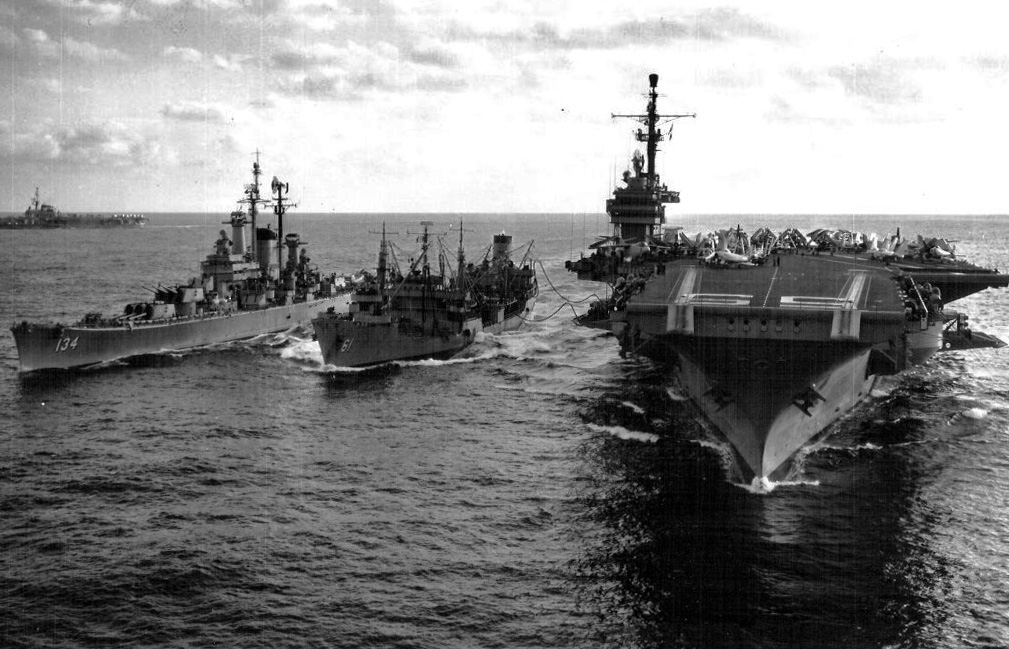
After the Korean War broke out Truman’s opposition to military control slightly relaxed, and he began to allow deployments of atomic weapons components overseas and on aircraft carriers. That included bomb components shipped to the Western Pacific as part of the U.S. threat posture during the war. [2] During the Eisenhower administration, however, the Air Force, the Army, and the Navy began to have routine access to complete nuclear weapons.[3] Thus, during subsequent Cold War crises, U.S. Navy’s aircraft carriers steaming to their destinations in the Western Pacific or the Eastern Mediterranean carried nuclear weapons while bombs could be uploaded on SAC bombers for alert actions.[4] The most dramatic example was the Cuban Missile Crisis, where SAC’s DEFCON 2 posture put hundreds and hundreds of nuclear-armed bombers and ICBMs ready for rapid strikes on targets assigned by war planners.[5]
During the 1950s and early 1960s, there were a remarkable number of crises during which U.S. leaders made threats, authorized nuclear weapons for use, and put strategic forces in a higher state of readiness. While the Soviets also made threats, e.g., Suez, in 1956, the U.S. threat posture was comparatively overwhelming. In addition to Suez, other crises included the Korean War, Indochina in 1954, the Taiwan Strait in 1954-55, Lebanon and Taiwan in 1958, and Cuba in 1962.
President Eisenhower who presided during most of these crises was not bloodthirsty but believed that U.S. nuclear superiority and threat-making were advantageous to protecting national interests. Eisenhower initially regarded nuclear weapons as first-resort munitions – for all intents and purposes the same as conventional weapons – especially in a U.S.-Soviet war. Yet by the time of the second Taiwan Strait Crisis, he was rethinking his position on nuclear use and ordered military leaders to use conventional weapons first in any clash with Chinese forces. [6]
The Taiwan Strait crisis notwithstanding, Eisenhower relied on “massive retaliation” and general war threats in the event of an actual military clash with Beijing or Moscow. During the 1958-1959 Berlin Crisis, he expected that the U.S. would initiate general nuclear war if there was a military conflict with the Soviets over allied access to West Berlin. For him this was the ultimate and most persuasive deterrent threat because he did not expect war to break out. Although some civilian strategists had been calling for flexible response and reliance on conventional non-nuclear options as a more credible deterrent than all-out nuclear war, Eisenhower rejected that altogether not least because it would break the limits on federal spending that he believed were essential.[7]
At the close of the 1950s, the Defense Department made a major change in its responses to significant crises. As in the past, the CINCs of specified commands, such as SAC, EUCOM, and PACOM would alert forces either on their own or in response to directives. Each command would respond to orders with its own set of procedures, but the Joint Chiefs wanted more certainty as to what that would mean. Thus, with the inauguration of the DEFCON system in 1959, the Joint Chiefs wanted assurance as to what a given level of alert for a given command would involve. With a directive that it issued in August 1959, the Joint Chiefs defined what the DEFCONs would mean and directed each of the commands to prepare reports on how they would respond to the situation, subject to further review by the high command.
This survey of the record of alerts and crises during the years before 1960 is by no means complete or comprehensive. It would be worth taking account of such events as Korea in 1950, the Indochina crisis in 1954, and the Taiwan Strait in 1954-5. The last two events were not the subjects of official histories while official histories of SAC and Korea in 1950 are not yet declassified. Moreover, accessing the declassified archival record on military operations during those crises is not possible during the pandemic. Nevertheless, the record that is at hand provides useful reminders of instances when the U.S. government used threats of force, directly or otherwise, to try to steer world events in ways that policymakers believed were compatible with national interests.
Looking at those events makes it worth assessing how adversaries saw those moves and how they affected their own military policies. Also important to consider is the impact of shows of alerts and shows of force on the reputation of the United States, whether enhancing or detracting. Taking such matters into account can inform conclusions as to whether those actions contributed to the United States’ long-term interests.[8]