The Reykjavik Aftermath
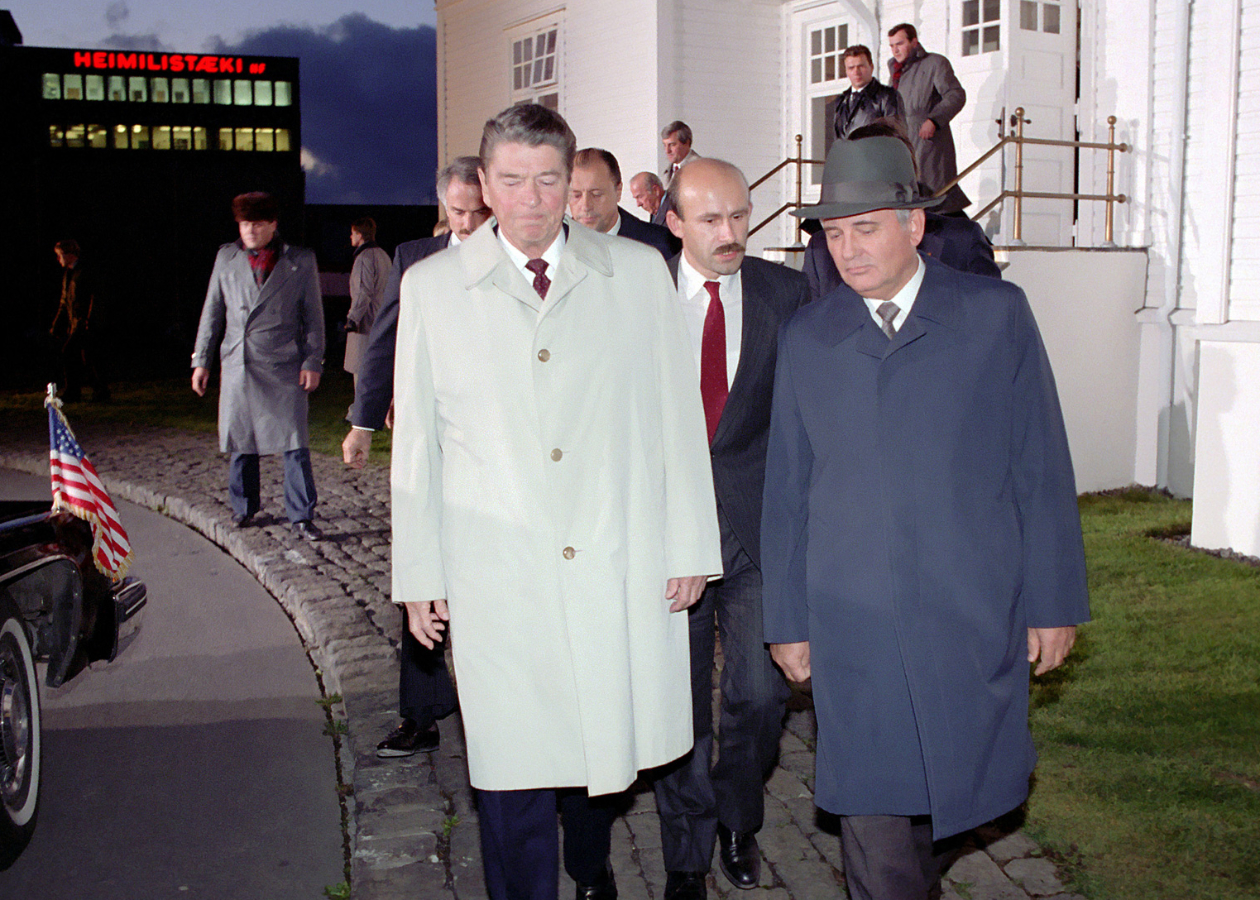
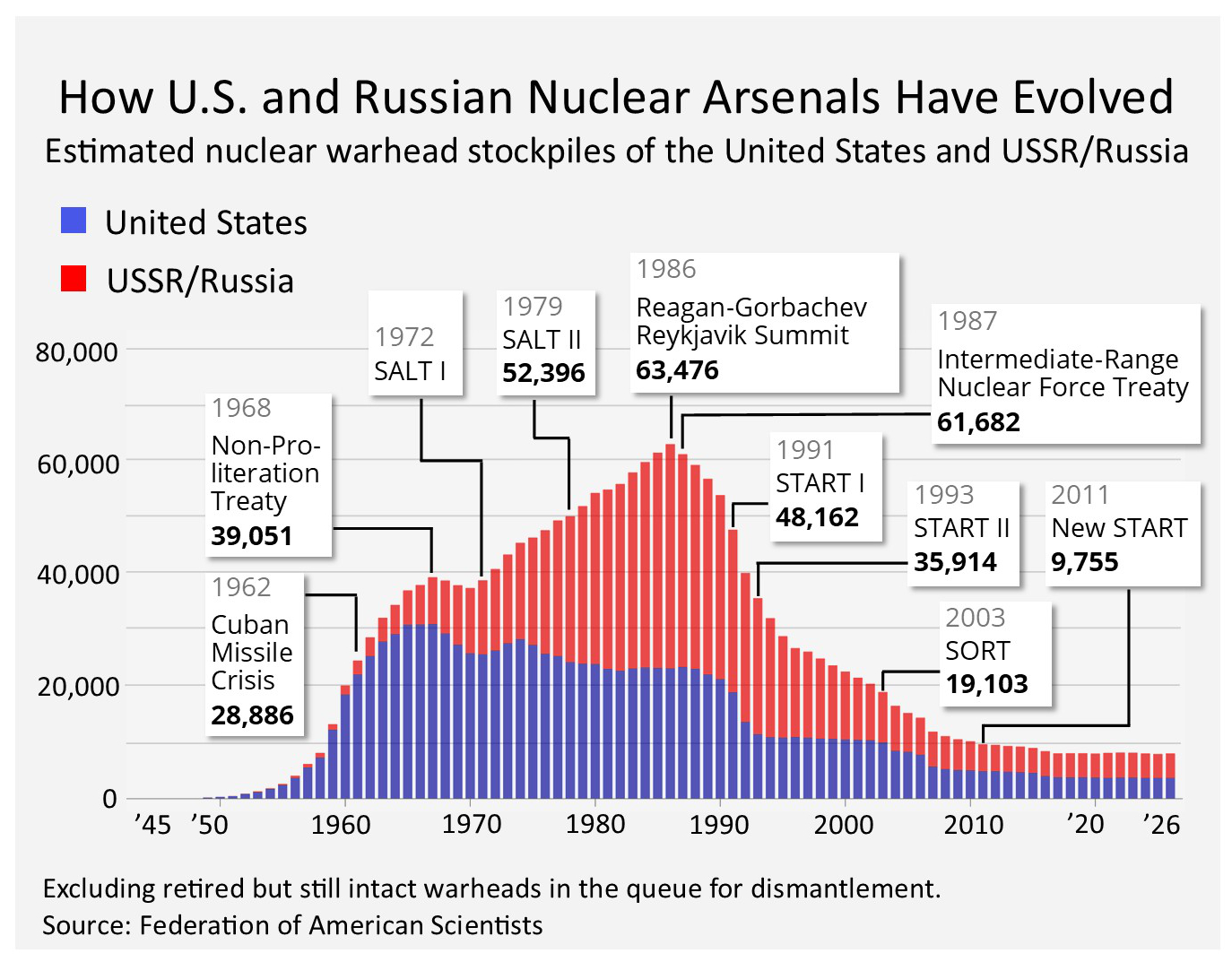
After Reykjavik, the documents show that the American side actively suppressed Ronald Reagan’s nuclear abolition ideas, while the Soviet side worried that Reykjavik was “as high” as the US would ever go, when Gorbachev expected this to be the beginning of a whole new era of nuclear arms reductions. With hindsight, the tentative agreements–even breakthroughs–that the two leaders reached at Reykjavik on 50% cuts in strategic weapons, on intermediate range missiles, and on nuclear testing would create an “arms race in reverse” that would culminate the next year with the first-ever elimination of a whole class of nuclear weapons in the INF Treaty of December 1987. But at the time, the competing narratives obscured the progress and left most observers (even Secretary of State George Shultz, who was there at Reykjavik) asking the question (in their chapter titles), “What happened at Reykjavik?” Now we know.

Document 1
U.S. Department of State Freedom of Information Act release
This remarkable one-page summary of the summit’s lessons seems to have been written on the last day of Reykjavik, given the mention of “today’s” discussions, but leaves a dramatically positive view of the summit in contrast to the leaders’ faces as they left Hofdi House, as well as to Shultz’s downbeat presentation at the press briefing immediately following the summit. It is unclear who authored this document, although the text says that “I have been pointing out these advantages [of thinking big] in a theoretical sense for some time” (which sounds like Paul Nitze). This document plus Gorbachev’s own very positive press briefing commentary immediately following the summit were included in Secretary Shultz’s briefing book for his subsequent media appearances.

Document 2
Gorbachev Foundation
In Gorbachev’s remarks on the way back from Reykjavik, written down by top aide Anatoly Chernyaev, the Soviet leader gives a very positive assessment of the summit. He proclaims that he is now “even more of an optimist after Reykjavik,” that he understands Reagan’s domestic problems and that the U.S. President is not completely free in making his decisions. He understands Reykjavik as signifying a new stage in the process of disarmament—from limitations to total abolition.

Document 3
Ronald Reagan Presidential Library, Alton Keel Files
The Reagan Library files reveal two different versions of the telephone conversation between British Prime Minister Margaret Thatcher and President Reagan on October 13 after the Reykjavik summit. This is the original summary written up by notetaker Peter R. Sommer. Here Reagan repeatedly mentions "the total elimination of all nuclear devices," and describes his agreement with Gorbachev as follows: "At the end of the first five-year period there would have been a fifty percent reduction in every kind of nuclear weapon, not just ballistic missiles. During the second five-year period, we would have eliminated the other fifty percent." But this version is not the one that may be found in the National Security Council's Executive Secretariat files as the official version of the conversation. Yet Thatcher clearly heard this language, and pushed back hard: "Giving up nuclear weapons is the sort of thing that Neil Kinnock advocates. This would be tantamount to surrender...."

Document 4
Ronald Reagan Presidential Library, Executive Secretariat NSC System File
This is the second—and official—U.S. version of the Reagan-Thatcher telephone conversation on October 13, 1986. Again, Peter R. Sommer is listed as the notetaker, but other documents in the file show that the memorandum received significant editing from NSC staffer Alton Keel (who was not on the call), with the approval of his boss, national security adviser John Poindexter, also not on the call. Comparing the original draft to the official version, the edits focused on retracting Reagan’s language on total elimination of nuclear devices and turning instead to a focus on eliminating ballistic missiles. “The other fifty percent” of “every kind of nuclear weapon” becomes “the other fifty percent of ballistic missiles.” The Reagan administration was busily walking away from Reagan’s own abolition proposals and trying to focus the public debate on a topic—ballistic missiles—where the Soviet numerical advantage made elimination in the U.S. national interest. Years later, when the Margaret Thatcher Foundation published its own record of the phone call (the notes taken by Thatcher aide Charles Powell), the Foundation noted that, “It is impossible to reconcile the British account of this conversation with the US version on the vital point of what the President had proposed at Reykjavik regarding elimination of nuclear weapons.”

Document 5
Margaret Thatcher Foundation
This is the Margaret Thatcher record of her telephone call with Reagan on October 13, 1986, in the form of a letter from her Private Secretary Charles Powell to Colin Budd of the Foreign Office. This record comports with the first U.S. version as drafted by notetaker Peter Sommer but not the official U.S. version as edited by Alton Keel and John Poindexter. Here, Powell quotes Reagan as saying “he had put forward a radical proposal under which the United States would guarantee not to deploy a strategic defense system for ten years in return for an undertaking to eliminate all US and Soviet nuclear weapons over that same period.” The British record shows Thatcher expressing “considerable concern” (an understatement) about any abolition proposal, and repeating “that it was important not to undermine public support for nuclear weapons as an essential element in the West's defences.” Nowhere in the British record are references to ballistic missiles.

Document 6
Margaret Thatcher Foundation
This further note from Margaret Thatcher’s Private Secretary Charles Powell to Colin Budd at the Foreign Office conveys “a number of points which struck me as particularly sensitive” that Powell had omitted from his October 13 account. These include Reagan’s dismissive words about the ABM Treaty, his belief that Soviet resistance to missile defense was just a cover for them to “go ahead like crazy” with their own, and his vague responses to Thatcher’s argument that nuclear weapons were essential to rectify the conventional imbalance in Europe. Powell concludes that Reagan “showed no sign of backing down from his concept of eliminating nuclear weapons within ten years, indeed showed considerable pride in it.”

Document 7
Volkogonov Collection, Library of Congress
In the first Politburo meeting after Reykjavik, Gorbachev reports on the results, starting with a standard ideological criticism of Reagan as a class enemy who showed “extreme primitivism, a caveman outlook and intellectual impotence.” He goes on, however, to describe the summit as a breakthrough and the attainment of a new “higher level from which now we have to begin a struggle for liquidation and complete ban on nuclear armaments.” The Politburo agrees with the assessment and approves the General Secretary’s tough posturing.

Document 8
Reagan Library, Alton Keel Files
This extraordinary memo to Reagan from his national security adviser, Admiral John Poindexter, just days after Reykjavik, admonishes the President to “step back” from his nuclear abolition rhetoric, “make no further public comment” to the effect that he agreed at Reykjavik with Gorbachev on abolition, and change the subject to the more palatable one of eliminating ballistic missiles. This encapsulates the White House strategy after Reykjavik to deal with the storm of criticism from allies (like Thatcher, NATO, Kohl, and the Japanese), from the Congress (no one there had been consulted), the Joint Chiefs (who not only hated abolition but were less than supportive on the ballistic missile proposal), and the Defense Department (Secretary of Defense Cap Weinberger had originally proposed the ballistic missile gambit, sure that the Soviets would never accept since they had so many more missiles than the U.S. did). All were “scandalized” (George Shultz’s word) by Reagan’s willingness to abolish nuclear weapons. Here Poindexter pushes hard for Reagan to drop his abolition remarks and realize that eliminating nuclear weapons was impossible for multiple reasons—the conventional imbalances, the impact on allied partnerships, the advantage abolition would give to a rogue breakout actor, the problem of verification, and more. Sure, abolition could be a long-term goal, but let’s not talk about it now.

Document 9
Volkogonov Collection, Library of Congress
Reacting to the U.S. decision to expel Soviet diplomats, the Politburo discusses the perceived American retreat from the understandings reached at Reykjavik and decides to press Reagan to follow through with the disarmament agenda on the basis of the summit. Gorbachev, who was hoping for further progress on arms control after Reykjavik, seems angry and betrayed by the U.S. side, which in his view “has been undertaking fraudulent maneuvers in order to distort the facts and confuse the public.” He concludes that “Reagan cannot keep a rein over his crowd.” Apparently, the U.S. authorities were still holding up dissemination of Soviet materials including Gorbachev’s press conference at Reykjavik. Gorbachev calls for new propaganda actions to give the U.S. public information about what actually was discussed during the summit.

Document 10
Margaret Thatcher Foundation
Even the closest allies could get confused by the mixed signals coming out of the White House about what was said at Reykjavik. White House chief of staff Donald Regan and national security advisor John Poindexter were trying to pretend Reagan’s proposals were about eliminating just ballistic missiles, not all nuclear devices. But even ballistic missiles were too much for the British, who insisted that “conventional and chemical imbalances” with the Soviets would have to be rectified as “a condition for abolishing ballistic missiles.” Here, the British ambassador, Sir Antony Acland, reports on an hour-long meeting with Poindexter on October 28, 1986, going over the Reykjavik discussions and the ballistic missile issue. “I left Poindexter in no doubt… that we wished to be fully consulted about new US thinking.” But Acland concludes: “This was an unsatisfactory discussion. I found Poindexter evasive, offering counter-arguments which seemed confused, and on occasion contradictory.” Two weeks later, Prime Minister Thatcher herself would come to Camp David to straighten out the American line and bring Reagan back to her own focus on keeping nuclear weapons to offset perceived Soviet conventional superiority in Europe.

Document 11
Gorbachev Foundation
At this Politburo session, Gorbachev and Shevardnadze discuss whether and when to reveal the new Soviet position on SDI testing, which would allow “testing in the air, on the test sites on the ground, but not in space.” This is a significant step in the direction of the U.S. position and is seen as a serious concession on the Soviet part by former Foreign Minister Gromyko. Gorbachev is very concerned that the U.S. administration is “perverting and revising Reykjavik, retreating from it.” He places a great deal of hope in Shevardnadze-Shultz talks in terms of returning to and expanding the Reykjavik agenda.

Document 12
Ronald Reagan Presidential Library
This cover memo describes the process of developing National Security Decision Directive 250 (next document) on Post-Reykjavik follow-up, led by national security adviser John Poindexter. No longer does anyone aspire to a world without nuclear weapons; only a world without ballistic missiles. The other striking aspect of this memo is Poindexter’s own claim that he has incorporated as much as he can (accounting for the President’s expressed bottom lines) of the Pentagon’s and other objections and that he needs to brief Reagan about remaining objections on matters that simply would not fit with the President’s program.

Document 13
Ronald Reagan Presidential Library
Largely the work of NSC staffer Robert Linhard, who participated at Reykjavik, NSDD 250 attempts to keep the U.S. national security bureaucracy focused on President Reagan’s goal of eliminating ballistic missiles while walking back from Reagan’s expressed intent at Reykjavik to eliminate all offensive nuclear weapons. In fact, the NSDD's version of Reykjavik completely leaves out the Reagan and Shultz statements to Gorbachev about welcoming the abolition of nuclear weapons. Still redacted on national security grounds are the passages about any changes in strategic targeting. Yet even this limited effort did not succeed in moving the U.S. bureaucracy towards realistic planning. In fact, the Joint Chiefs of Staff promptly weighed in with national security adviser Poindexter to the effect that eliminating missiles would require large increases in conventional military spending to offset the Soviet Union. Apparently, no one involved in the U.S. policy process understood that Gorbachev was willing to cut conventional forces as well.

Document 14
Gorbachev Foundation
Here the Politburo discusses the results of the Shevardnadze-Shultz talks in Geneva, where Shultz refused to discuss Shevardnadze’s new proposals concerning what is allowed and not allowed under the ABM treaty. The new Soviet position, discussed and approved by the Politburo on October 30 (see Document 11), allowes SDI testing in the labs, “in the air, on the test sites on the ground,” which was a major change from the previous Soviet position. Had Gorbachev agreed to it on the last day of Reykjavik, the leaders could have agreed on a program of total abolition, but the Vienna meeting showed that it was too late. Shevardnadze informed his comrades that Shultz “did not want to talk about it. […] At the press conference he did not even mention that he was presented with a draft of a framework agreement.” The U.S. Secretary of State had instructions not to discuss the new Soviet proposals. Shultz’s position notwithstanding, Gorbachev emphasizes the need to press the U.S. to move forward on the basis of Reykjavik. Gorbachev stresses that “we have not yet truly understood what Reykjavik means,” referring to its significance as a new level of disarmament dialogue.

Document 15
Gorbachev Foundation
In a conversation with Chernyaev, Gorbachev talks about Soviet next steps in countering the U.S. attempts to circumvent Reykjavik. He stresses that “we cannot go below Reykjavik” and is concerned that “the Americans will not go above Reykjavik.”

Document 16
Reagan Library, Jack Matlock Files
The National Security Council’s senior Russia specialist (and future U.S. ambassador to Moscow) Jack Matlock had served as notetaker for several of the Reykjavik sessions and was perhaps the first on the U.S. side to realize how many breakthroughs the two leaders had actually accomplished, even though ultimately failing to reach a formal agreement. Here, Matlock proposes a draft letter for Reagan to send to Gorbachev, both emphasizing the breakthroughs (reducing intermediate-range missiles, cutting strategic forces by 50%, negotiating on nuclear testing) and complaining about the ongoing Soviet war in Afghanistan and the “discouraging” Soviet comments on Reykjavik insisting on a package deal—all or nothing. Matlock even attaches a “notional plan” for nuclear abolition in three phases, each likely to take longer than the five-year periods discussed at Reykjavik but involving enormous changes in Soviet practices, not only on nuclear weapons but also on conventional forces and on human rights. However, Matlock’s timing is off; the very day he forwards this package at the NSC, his boss Admiral Poindexter resigns as a result of the Iran-Contra scandal breaking, and a siege mentality descends upon the White House.

Document 17
Gorbachev Foundation
In a Politburo discussion of the Reagan decision to abandon the SALT II treaty, Gorbachev angrily states that the Americans are not doing anything in the spirit of Reykjavik and that the recent position of the Reagan administration was related to the domestic political crisis over Iran-Contra. Yegor Ligachev agrees with Gorbachev that, after Reykjavik, the Soviet positions only became stronger. Gorbachev speaks about his awareness of growing opposition to his disarmament proposals among the generals, who are “hissing among themselves.”

Document 18
Reagan Library, Jack Matlock Files
Air Force Colonel Robert Linhard served as the National Security Council’s senior in-house arms control expert and had been a key player in the Reykjavik discussions, to the point of personally drafting the texts of various offers that Reagan handed to Gorbachev on the ABM Treaty, SDI testing, 50% reductions in strategic weapons, and more. Here, Linhard criticizes the package put together by the NSC’s senior Russia specialist, Jack Matlock. Not only is the NSC in disarray with Poindexter’s departure and multiple investigations of the NSC’s role in the Iran-contra scandal, but also now is not the time, Linhard writes, for a “‘dramatic new proposal’ which focuses us on a plan for the total elimination of nuclear weapons.” Linhard remarks that “this would be very damaging at this time, especially since we have just put the flap over ‘zero nuclear weapons’ in the context of Reykjavik behind us.” This kind of thinking “is not on the main line of the recent evolution of our policy and not in synch with the Reagan-Thatcher priorities.” Such was the epitaph for nuclear abolition in 1986.

Document 19
Ronald Reagan Presidential Library
This set of documents demonstrates how the proposals on the table at Reykjavik had fallen off the table in Washington after the Iran-Contra scandal and Poindexter’s departure and as the result of the U.S. military’s opposition. NSC senior staffer Alton Keel sets up an agenda for President Reagan’s meeting with the Joint Chiefs of Staff that includes the elimination of ballistic missiles together with routine briefings about military exercises and anti-drug efforts in Bolivia and alerts the President to the military’s insistence on large spending increases. But he does not forward the striking talking points prepared by the NSC staff (under Poindexter) that would have expressed to the top U.S. military officials what Reagan had said at Reykjavik to Gorbachev.